


Last Updated: November 2, 2026
Quick Summary
Choose Dr. Squatch if scent is your priority and your skin tolerates fragrance, or Chagrin Valley if you have reactive skin and want unscented bar soap options. Neither brand is a bad choice; the right bar soap depends on your skin type, scent tolerance, and price per wash.
- Dr. Squatch offers bold, long-lasting scents with fast, dense lather and wide availability.
- Chagrin Valley provides many unscented and lightly scented bars with clear, detailed ingredient lists.
- Patch test any new bar on your inner forearm for a few days before full use.
- Weigh a bar on day one and again after two weeks to measure actual soap consumption.
- Store bar soap on a draining dish and let it dry fully between uses to extend bar life.
Table of Contents
- Dr Squatch vs Chagrin Valley at a Glance
- Dr. Squatch Soap Review: Scent, Lather, and Marketing Claims
- Chagrin Valley Soap Review: What the Ingredient List Reveals
- Ingredient-by-Ingredient: Plant Oils, Soap Base, and Fragrance
- Which Bar Soap Works Best for Sensitive Skin?
- Bar Weight, Durability, and How to Make Bar Soap Last Longer
- Price Per Bar and Price Per Use: What You Actually Pay
- Choosing the Bar That Fits Your Skin
- Frequently Asked Questions
Dr Squatch vs Chagrin Valley at a Glance
The Dr Squatch vs Chagrin Valley question usually comes down to one thing: do you want a scented, heavily marketed bar, or a plain bar built around a short ingredient list? They just aim at different buyers.
Here is the short answer. Neither is a bad choice. The right pick depends on your skin type, your scent tolerance, and how much you are willing to pay per wash.
Below, we break down scent, lather, ingredients, sensitive-skin suitability, bar life, and true cost per use, so you can choose with your eyes open.
| Category | Dr. Squatch | Chagrin Valley | Edge |
|---|---|---|---|
| Scent approach | Strong, cologne-style scents | Wide range, many unscented options | Chagrin Valley for sensitive noses |
| Ingredient transparency | Full lists online | Full lists online | Tie |
| Sensitive-skin focus | Limited | Extensive | Chagrin Valley |
| Lather | Dense, quick foam | Creamier, slower build | Depends on preference |
| Bar durability | Moderate | Moderate to high | Slight edge to Chagrin Valley |
| Price positioning | Mid-to-premium | Mid-to-premium | Tie |
Dr. Squatch Soap Review: Scent, Lather, and Marketing Claims
Pros:
- Bold, long-lasting scents
- Fast, dense lather
- Widely available in stores and online
Cons:
- Strong fragrance can bother reactive skin
- "Natural" claims are broader than the ingredient list supports
- Scent-first design is not built around sensitive skin
Chagrin Valley Soap Review: What the Ingredient List Reveals
Chagrin Valley's strength is breadth. The brand offers a large product range with many unscented and lightly scented bars. For anyone with eczema, psoriasis, or rosacea, that transparency matters more than packaging.
The trade-off is decision fatigue. A huge catalog means more reading before you buy, and a bar that suits one person's skin may not suit another's. The brand's own guidance on patch testing is worth following, especially if you have reacted to "natural" products before.
Pros:
- Many unscented and low-scent options
- Clear, detailed ingredient lists
- Creamy lather that suits dry skin
Cons:
- Large catalog takes time to sort through
- Slower lather than foam-first bars
- Still requires patch testing for reactive skin
Ingredient-by-Ingredient: Plant Oils, Soap Base, and Fragrance
Most natural bar soap starts with the same core: a plant oil blend, water, and sodium hydroxide. Sodium hydroxide sounds alarming, but it is fully consumed in saponification and does not remain in the finished bar. What separates brands is the fat blend and how fragrance is added.
Here is how to read any bar soap ingredient list:
- Olive oil, gentle, creamy lather, good for dry skin
- Coconut oil, fast, abundant foam and cleansing power
- Palm oil, hardness and bar durability
- Castor oil, stabilizes lather and adds a silky feel
- Essential oils, plant-derived scent, often with aromatherapy benefit
- Fragrance oil, synthetic scent, stronger and cheaper, less suited to reactive skin
The fragrance question is where Dr Squatch vs Chagrin Valley really splits. If you want to understand how plant oils and essential oils actually benefit skin, our guide to the benefits of essential oils in soap explains what each oil brings to a bar.
Which Bar Soap Works Best for Sensitive Skin?
For anyone with eczema, psoriasis, or rosacea, a few rules apply across brands:
- Patch test on the inner forearm for a few days before full use
- Choose unscented or single essential oil bars first
- Avoid bars with long synthetic fragrance lists if you have reacted before
- Keep water lukewarm and moisturize after washing
If you need a bar built specifically around reactive skin, our natural soap for psoriasis relief covers which plant oils and additives calm irritation. For readers who want a dense, tallow-based bar, our own tallow formula is a good reference point for what a simple, short ingredient list looks like.
Bar Weight, Durability, and How to Make Bar Soap Last Longer
Bar weight tells you less than people think. A heavier bar is not automatically a longer-lasting one. What matters is how hard the bar is, which comes down to the fat blend, the cure time, and how you store it between washes.
Why cure time matters. Cold-process soap is made with sodium hydroxide and water, and the bar continues to lose water for weeks after it is cut. A bar that has cured for several weeks is denser and harder than a bar cut and shipped within days. Harder bars dissolve more slowly in the shower because less surface softens between uses. That is the main reason two bars of the same weight can last very different lengths of time.
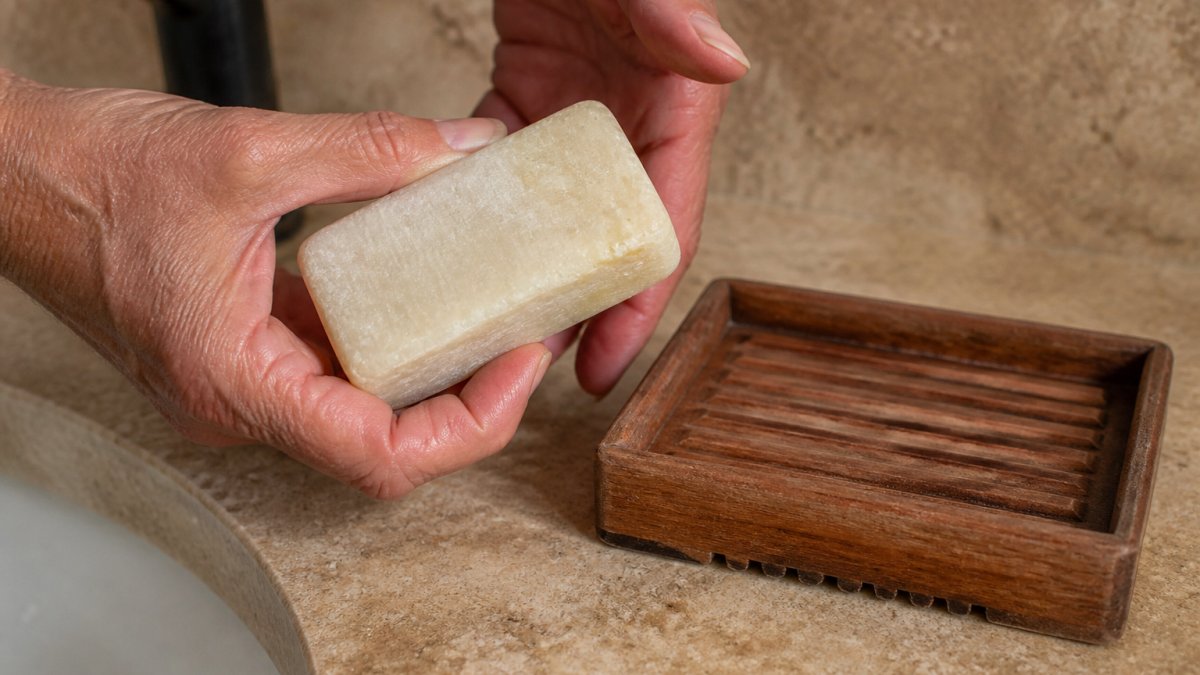
How to measure wear on your own bars. Weigh the bar on a kitchen scale on day one, then weigh it again after two weeks of normal use. The difference is how much soap you are actually consuming. Do this for each brand you try and you will see which bar gives up more soap per shower, independent of sticker price or listed weight.
A few habits make any bar last far longer:
Purity – Immunity Blend Handmade Bar Soap with Essential Oils →
- Store it on a draining dish, never in a puddle
- Let it dry fully between uses
- Cut large bars in half and keep one dry
- Keep the bar out of direct shower spray
- Use a washcloth or loofah to build lather off the bar
If you want a bar that fits this durability discussion, our grass-fed beef tallow soap is built around a hard, long-lasting base.

Price Per Bar and Price Per Use: What You Actually Pay
Price per use can be a more useful comparison than price per bar. A bar that costs more but lasts longer may be the cheaper option per wash.
Here is the framework we use, and you can run it on any two bars in about five minutes.
Step 1: Record the sticker price and the listed weight. Write down what you actually paid and the net weight printed on the wrapper. Ignore the box size and the marketing copy. The label weight is the only number that matters for this comparison.
Step 2: Track how long the bar lasts. Keep the bar on a draining dish, use it the same way every day, and note the date it becomes too thin to lather. That day count is your real durability number, and it will vary with water hardness, shower length, and storage.
Step 3: Convert to cost per wash. Divide the price by the days the bar lasted, then multiply by the number of showers you take per week. That gives you a rough cost per wash you can compare across brands, formats, and bar sizes.
Step 4: Adjust for how you wash. A bar used directly on the body wears down faster than one lathered on a washcloth. If you switch methods mid-test, your numbers are not comparable. Pick one method and stay with it for the whole bar.
Watch out: comparing a fresh bar's first-week wear to a bar that has already been sitting in a wet shower for a month will make the older bar look far worse than it is. Start every test from a dry, unused bar and the same dish.
If you are weighing whether the premium is justified, our breakdown of why handmade soap is worth it makes the case directly.
Choosing the Bar That Fits Your Skin
Here is how we would decide between these two brands.
Choose Dr. Squatch if scent is your priority, your skin tolerates fragrance, and you want a bar you can grab locally. Choose Chagrin Valley if you have reactive skin, want unscented options, or prefer to read a full ingredient list before buying.
Neither brand is the automatic answer for everyone. If you want a bar made in small batches with a short, pronounceable ingredient list and a family tradition behind it, that is exactly what we make at Amish Country Soap Co. You can browse our bar soaps by skin need and see which plant oils and essential oils fit your routine.
Best for Dr. Squatch: Scent-driven buyers with tolerant skin. Skip if: You have reacted to fragrance before.
Best for Chagrin Valley: Sensitive-skin buyers who want unscented options. Skip if: You want a fast-foaming, strongly scented bar.
The hardest part of buying natural soap is not finding a bar. It is finding one that matches your skin without a drawer full of failed experiments. At Amish Country Soap Co, we make cold-process bars in small batches with simple, pronounceable ingredients, backed by a 250-year family tradition of soapmaking. Our customers tell us the bars hydrate dry skin and last, and our catalog lets you shop by skin need instead of guessing. Get started with Amish Country Soap Co and find a bar built for your skin.
Frequently Asked Questions
How does Chagrin Valley soap compare with Dr. Squatch?
Both brands sell bar soap, and the real split for most buyers is how much fragrance each uses, which matters if you have sensitive skin. Read the ingredient list on each bar and compare the first five ingredients before you commit.
Which brand is better for sensitive skin?
Look for short ingredient lists, no synthetic fragrance, and a bar with colloidal oatmeal or tallow if your skin runs dry. A soap for sensitive skin should list plant oils and essential oils you can pronounce, not a long fragrance blend. Patch test on your inner arm for a few days before using a new bar on your face or on eczema patches.
Which soap lasts longer, Dr. Squatch or Chagrin Valley?
Bar weight and how you store it decide longevity more than the brand name. A 4 oz bar kept on a draining soap dish lasts far longer than the same bar sitting in a puddle. Cut bars in half, keep them dry between showers, and use a loofah or washcloth to build lather instead of rubbing the bar directly on your skin.
Is Dr. Squatch soap worth the price?
That depends on what you pay for. If scent variety and bold marketing matter to you, the higher price per bar may feel fair. If you want simple plant oils and a bar that hydrates without stripping, compare the price per use against a smaller handcrafted brand. Divide the bar price by how many showers it delivers, not by how the label looks.


