


Last Updated: October 26, 2026
Quick Summary
The best natural soap for psoriasis is a fragrance-free, cold-process bar with a short ingredient list and no harsh detergents. Look for barrier-supporting emollients like glycerin, shea butter, and plant oils, and patch test a single bar on your inner forearm for 48 hours before committing.
- Synthetic fragrance is the single most common trigger in natural products that still irritate skin.
- Fragrance-free is the safer label read for psoriasis-prone skin, since unscented can mean a masking fragrance was added.
- Keep washing under a minute with lukewarm water and apply moisturizer within three minutes of patting dry.
- Reserve medicated bars like coal tar or salicylic acid for two or three sessions a week alongside a daily natural bar.
- Call a dermatologist if plaques cover large areas, crack and bleed, or joint pain appears alongside skin symptoms.
Table of Contents
- Why Soap Choice Matters When You Have Psoriasis
- How to Pick the Best Soap for Psoriasis
- Soap Ingredients for Psoriasis: What Helps and What Hurts
- A Psoriasis Skin-Care Routine Built Around Gentle Cleansing
- Natural Soap vs. Medicated Options: Where Each One Fits
- What Natural Soap Can't Do, and When to Call a Dermatologist
- Choosing Your Bar by Skin Need
- Frequently Asked Questions
Why Soap Choice Matters When You Have Psoriasis
Natural soap for psoriasis relief matters because the wrong bar can strip the skin barrier and turn a calm week into a flare. Psoriasis is a chronic immune condition that speeds up skin cell turnover, producing plaques, scaling, and itching (Psoriasis Symptoms, Causes, & Risk Factors).
Most people blame their medication when a flare hits. Harsh detergents and synthetic fragrance lift away the lipids that hold moisture in, and dry, cracked skin invites more irritation.
If you want the full background before you shop, our complete guide to natural soap for psoriasis-prone skin walks through the condition step by step.
How to Pick the Best Soap for Psoriasis
The best soap for psoriasis is a fragrance-free, cold-process bar with a short ingredient list and no harsh detergents. Start there and adjust for your symptoms, not for the label's marketing.
Match the Bar to Your Symptoms and Body Area
Thick plaques on elbows and knees tolerate more friction than thin, inflamed skin on the face or in skin folds. Our unscented sensitive skin handmade bar soap is built for exactly this: no added fragrance, no essential oils, just a plain cold-process bar.

For itchy, reactive skin, an oatmeal-based bar is the more comforting choice. For oily or breakout-prone areas, tea tree can help.
Patch Test Before You Commit
A common mistake is buying a six-pack before testing a single bar. Lather a small amount on your inner forearm, rinse, and wait 48 hours. If redness, stinging, or new itching appears, stop. Patch testing takes two days and saves weeks of guessing.
Soap Ingredients for Psoriasis: What Helps and What Hurts
Ingredients that help psoriasis-prone skin are the ones that clean gently and leave moisture behind. Ingredients that hurt are the ones that strip, perfume, or over-exfoliate. The useful next step is sorting ingredients by what they actually do, because a bar can be soothing without being therapeutic, and a therapeutic active can still irritate if it is used wrong.
A Three-Tier Way to Read an Ingredient List
Most practitioners find it helpful to sort ingredients into three buckets rather than treating every botanical as equally beneficial.
- Barrier-supporting cleansers and emollients, these do not treat plaques, but they reduce the irritation that makes plaques worse. Examples include glycerin, shea butter, and food-grade plant oils such as olive, sunflower, and coconut. They work by slowing water loss through the skin surface and cushioning the barrier so it is less reactive to friction and detergent.
- Symptom-soothing ingredients, these calm itch and loosen scale without acting on cell turnover. Colloidal oatmeal is the best-known example; it forms a temporary film that reduces the sensation of itch and helps lift flaky scale. Honey is a humectant that draws water into the upper skin layers. Neither changes the underlying immune cycle.
- Mildly active ingredients, these can influence scaling or surface microbes but come with trade-offs. Tea tree oil has antiseptic properties and may help oily, troubled patches, but it is a known irritant for some people, especially on broken skin. Sulfur and salicylic acid are stronger actives usually found in medicated bars rather than natural ones.
Soothing Ingredients Worth Looking For
- Colloidal oatmeal: calms itching and lifts flaky scale without scrubbing. It is most useful in a short-contact wash or a soak, not a long lather.
- Honey: a humectant that draws water into the skin. In a rinse-off bar its benefit is modest, but it makes a bar less drying than a plain detergent bar.
- Shea butter and plant oils: emollients that cushion the barrier. Look for them high in the list if your skin feels tight after washing.
Our Oatmeal & Honey Bar Soap is a good example of the first two working together, and it is the bar we point itchy-skin customers toward most often.

Ingredients and Fragrances to Avoid
Watch out: synthetic fragrance is the single most common trigger in "natural" products that still irritate. A bar can be plant-based and heavily perfumed at the same time. The same caution applies to essential oil blends, which are natural but can still provoke reactions on sensitive or broken skin.
- Synthetic fragrance and dyes
- Sulfates and harsh detergents
- Parabens and aluminum
A Quick Label Checklist
Before you buy, scan the ingredient list for four things: no added fragrance or dye, no sulfate detergents near the top, a short list you can pronounce, and an emollient such as glycerin or shea butter in the first several ingredients. That checklist will filter most of the shelf faster than any marketing claim.
A Psoriasis Skin-Care Routine Built Around Gentle Cleansing
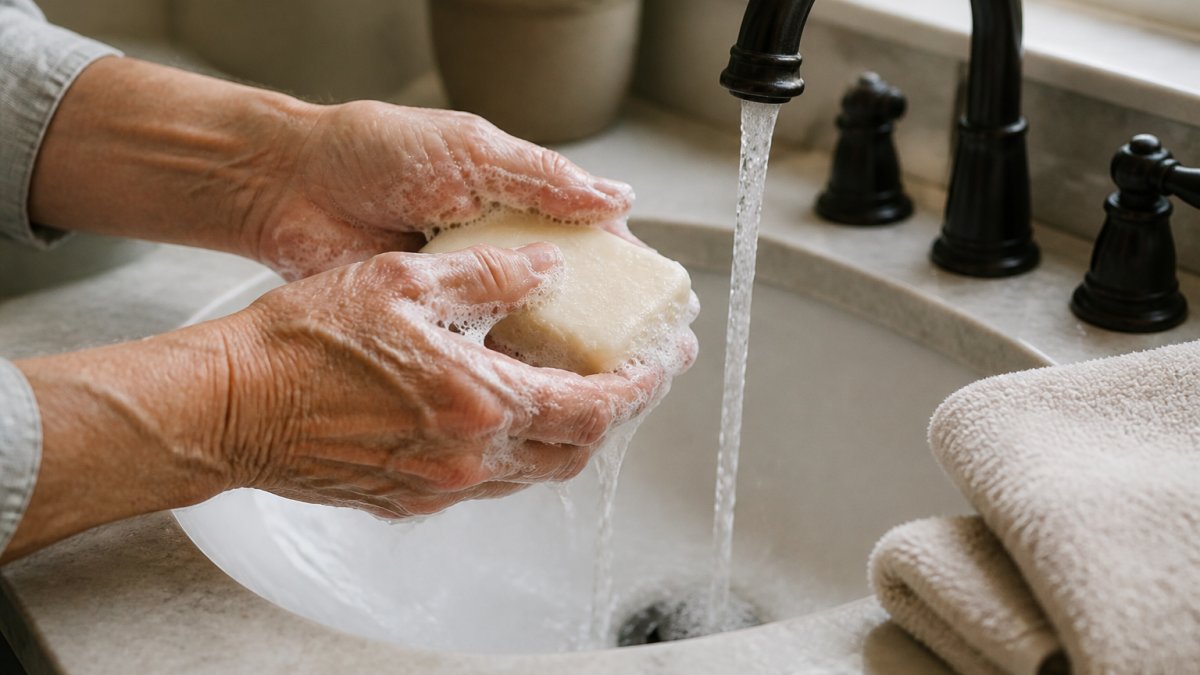
A psoriasis skin-care routine works best when cleansing is short, lukewarm, and followed immediately by moisture. The goal is clean skin, not squeaky skin.
Bee-Utiful Bar Soap | Tea Tree Oil & Honey →
Step-by-Step Washing Routine
- Use lukewarm water, never hot.
- Lather the bar in your hands rather than scrubbing it on plaques.
- Keep contact under a minute.
- Pat dry, do not rub.
- Apply moisturizer within three minutes, while skin is still damp.
- Reserve exfoliation for calm periods only.
If you want a ready supply for daily use, the Sensitive Solutions unscented 5-pack covers a full week of gentle cleansing without running out mid-routine.

Natural Soap vs. Medicated Options: Where Each One Fits
Natural soap and medicated soap do different jobs, and the honest answer is that many people need both. Natural bars handle daily cleansing and moisture. Medicated options target scaling and cell turnover more directly. The gap most product pages skip is how to sequence them, so here is a practical comparison rather than a brand list.
What Each Option Actually Does
- Coal tar and pine tar soaps have a long history in psoriasis care. Tar slows the rapid turnover of skin cells and can reduce scaling and itch. Trade-offs: a strong scent, staining of light fabrics, increased sun sensitivity, and dryness in some skin types. Tar bars are usually used a few times a week rather than daily.
- Salicylic acid softens and lifts thick scale by loosening the bonds between dead cells. It is useful on elbows, knees, and the scalp, but it can sting on cracked or inflamed skin and should not be layered over broken plaques.
- Sulfur has a long folk history and mild antiseptic and keratolytic action. It is drying, so it suits oily patches better than dry ones.
How to Sequence Natural and Medicated Cleansing
A common pattern is to keep a gentle natural bar as the daily default and reserve a medicated bar for two or three sessions a week on the areas that need it. Wash with the natural bar first to clean without stripping, then use the medicated bar on the affected areas for the contact time the label specifies, and rinse thoroughly. Follow immediately with moisturizer. Do not scrub either bar into plaques.
What Has Evidence and What Is Mainly Soothing
Coal tar and salicylic acid have decades of clinical use behind them and are recognized in dermatology guidance for scaling and plaque care. Colloidal oatmeal is recognized mainly for itch and comfort, not for clearing plaques.
The American Academy of Dermatology publishes guidance on when each approach is appropriate, and it is worth reading before you self-treat. If you are using a prescription topical, ask your clinician or pharmacist before adding a tar or salicylic acid bar, because layering actives can increase irritation.
What Natural Soap Can't Do, and When to Call a Dermatologist
Natural soap cannot cure psoriasis, and any product claiming otherwise is overselling. It manages symptoms: it reduces irritation, supports hydration, and removes scale gently.
Call a dermatologist if plaques cover large areas, crack and bleed, or fail to improve after consistent gentle care. Joint pain, swelling, or stiffness alongside skin symptoms needs medical attention promptly, because psoriatic arthritis can develop (Psoriatic Arthritis Symptoms, Causes, & Risk Factors). Our article on how to treat eczema naturally covers a related condition if your diagnosis is still unclear.
Choosing Your Bar by Skin Need
Here is how we would sort the shelf, based on what your skin is doing right now.
| Skin Need | What to Look For | What to Avoid | Our Pick |
|---|---|---|---|
| Itching and flaking | Colloidal oatmeal, honey | Fragrance, dyes | Oatmeal & Honey Bar |
| Very sensitive or reactive | Unscented, short ingredient list | Essential oils | Oh Naturale' Unscented |
| Oily, breakout-prone patches | Tea tree oil, shea butter | Heavy butters | Bee-Utiful Bar |
| Daily maintenance | Mild cold-process bar | Sulfates | Sensitive Solutions 5-pack |
Amish Country Soap Co has been making cold-process bars by hand since 1762, using simple, pronounceable ingredients and no synthetic fragrance. Browse the full range and shop by skin need to find the bar that matches your routine.
Frequently Asked Questions
Can natural soap help relieve psoriasis symptoms?
Natural soap can help by cleaning skin without the harsh detergents and synthetic fragrances that trigger irritation for many people with psoriasis. A gentle, fragrance-free bar supports the skin barrier and can reduce itching and flaking between flare-ups. It will not clear plaques on its own, though. Think of natural soap as one part of a psoriasis skin-care routine alongside moisturizing and any treatment your dermatologist recommends. Bars made with colloidal oatmeal or honey tend to be the most soothing for reactive skin.
Which soap ingredients should people with psoriasis look for?
Look for short ingredient lists built on plant oils such as olive, coconut, and avocado oil, plus emollients like shea butter. Colloidal oatmeal is valued for calming itch, honey draws in moisture. Unscented formulas are safest for daily use. When comparing soap ingredients for psoriasis, favor bars that list no synthetic fragrance and no essential oils if your skin is easily irritated.
What soap ingredients should people with psoriasis avoid?
Skip bars with synthetic fragrance, harsh detergents like sodium lauryl sulfate, and strong essential oil blends, since these are common triggers for itching and redness. Antibacterial soaps and heavily perfumed body washes can strip the skin barrier and leave plaques more irritated. If a label lists a long mix of botanicals you cannot pronounce, patch test it first. Anyone with a known allergy should check for that specific ingredient rather than assuming natural means safe.
Is goat milk soap good for psoriasis-prone skin?
Goat milk soap is a popular choice because the milk fats act as emollients that leave skin feeling softer after washing. Many people with dry, flaky skin find it comfortable, but the response varies. If you try one, choose a fragrance-free version and patch test on a small area for a few days before using it on plaques. Stop if you notice new redness or stinging, and keep using a moisturizer afterward to lock in hydration.
Psoriasis asks for patience, and the right cleanser makes that patience easier to keep. Amish Country Soap Co offers handcrafted, cold-process bars made with simple ingredients, backed by a 250-year family soapmaking tradition and a 4.93 average rating across 462 customer reviews. Start with an unscented bar, patch test it, and build your routine around gentle cleansing. Get started with Amish Country Soap Co and give your skin a wash it can tolerate.


