


Last Updated: October 30, 2026
Quick Summary
Handmade soap is worth it for most people with dry, sensitive, or reactive skin because it keeps the natural glycerin that commercial makers extract and sell separately. It costs more per bar, but the cost per wash can be close to a premium commercial bar. It cannot cure skin conditions like eczema.
- A $6.00 handmade bar can cost about $0.10 per wash, similar to a $5.00 premium commercial bar.
- Leaving a handmade bar in water roughly triples its cost per wash, so use a draining dish.
- A $21.99 five-pack brings the per-bar price to about $4.40 and lowers cost per wash.
- Fragrance-free is not the same as unscented, so read the full ingredient list if your skin reacts.
- Handmade soap can clean gently but cannot treat eczema or psoriasis, which need a dermatologist.
Table of Contents
- Handmade Soap vs. Store-Bought Soap: What Actually Differs
- Why Is Handmade Soap Expensive? Breaking Down the Cost
- Natural Soap for Dry Skin: What It Can and Cannot Do
- How Long Does Handmade Soap Last? Curing, Storage, and Bar Longevity
- How to Tell Genuine Handmade Soap From Marketing
- Matching the Bar to Your Skin: Sensitive, Dry, and Scented Options
- Shop by Skin Need: Picking Your First Bar
- Frequently Asked Questions
Handmade Soap vs. Store-Bought Soap: What Actually Differs
Is handmade soap worth it? For most people with dry, sensitive, or reactive skin, yes. The difference comes down to what is in the bar and what has been removed from it. This guide from Amish Country Soap Co breaks down the real trade-offs, the honest costs, and the cases where a drugstore bar is the smarter buy.
Handmade soap is a bar made in small batches from plant oils and lye, with the natural glycerin left in. Store-bought soap is often made at industrial scale, with that glycerin extracted and sold separately. That single decision changes how the bar feels on your skin.
At Amish Country Soap Co, our family has made cold-process soap for over 250 years.
Ingredient Lists Side by Side
Read two ingredient labels and the difference is obvious. Our handmade bars list a short set of ingredients, such as water, olive oil, coconut oil, palm oil, and sodium hydroxide.
- Handmade: recognizable oils, lye, water, maybe essential oil or oatmeal
- Commercial: tallow or synthetic base, fragrance, dyes, chelating agents, preservatives
- Both: clean your skin. Only one leaves the glycerin in.
The FDA guidance on cosmetic labeling requires ingredients to be listed, so you can check this yourself in the aisle.
Glycerin and Moisture Retention
Glycerin is the quiet hero of soapmaking. It forms naturally during saponification and pulls water toward your skin.
Cold-process handmade soap keeps it in the bar.
Why Is Handmade Soap Expensive? Breaking Down the Cost
Handmade soap costs more per bar because it is made slowly, in small batches, by people rather than machines. A bar at $6.00 from our shop is not competing with a mass-market bar on shelf price, and it never will. The useful question is not whether the bar costs more, but whether the cost per wash is meaningfully higher once you account for bar weight, how long the bar actually lasts, and what you are getting for the difference.
Here is where the money actually goes:
- Ingredients: pure olive, coconut, avocado, and castor oils cost far more than tallow or synthetic bases
- Time: cold-process bars need weeks to cure before they are ready to sell
- Labor: small-batch production means hands-on work at every stage
- Packaging: minimal, plastic-free options cost more than shrink wrap
- Unsold inventory: a maker who cures for six weeks is carrying stock that cannot be sold for six weeks, and that carrying cost is baked into the price
Cost Per Wash, Not Cost Per Bar
The fair comparison is cost per wash, not cost per bar. Rather than assert that handmade wins, walk through the assumptions yourself. The math below uses round, illustrative numbers so you can substitute your own.
| Bar Type | Price | Bar Weight | Estimated Washes | Cost Per Wash |
|---|---|---|---|---|
| Budget mass-market bar | $1.50 | 4 oz | ~40 | ~$0.04 |
| Premium commercial bar | $5.00 | 4.5 oz | ~50 | ~$0.10 |
| Handmade bar (dry storage) | $6.00 | 4.5 oz | ~60 | ~$0.10 |
| Handmade bar (left in water) | $6.00 | 4.5 oz | ~25 | ~$0.24 |
| Handmade 5-pack | $21.99 | 4.5 oz each | ~300 total | ~$0.07 |
Three things fall out of that table:
- The gap is smaller than the sticker price suggests. A $6.00 handmade bar and a $5.00 premium commercial bar can land at nearly the same cost per wash once you count washes rather than bars.
- Storage is the biggest variable in the whole calculation. The same $6.00 bar costs roughly two and a half times more per wash if it sits in a puddle. A draining dish is the cheapest upgrade in this article.
- Multi-packs change the answer. At $21.99 for five bars, the per-bar price drops to about $4.40, and the cost per wash moves closer to budget-bar territory.
What You Are Actually Paying For
The premium over a budget bar buys a short ingredient list and the labor behind the bar. Whether that is worth the difference is a personal call, and it is a fair one to decline. If you are happy with a budget bar and your skin is happy too, you do not need to switch.
A bar left sitting in water dissolves faster. Keeping it on a draining dish helps it last longer between uses.
Natural Soap for Dry Skin: What It Can and Cannot Do
Natural soap for dry skin can clean gently, but it cannot cure a skin condition. That distinction matters, because overpromising is where handmade soap marketing loses trust.
What it cannot do: replace a dermatologist's treatment for eczema or psoriasis. For a closer look at this skin concern, read natural soap for psoriasis-prone skin.
Our Oatmeal & Honey Bar Soap, made with colloidal oatmeal and real honey, is a bar you may consider when itch is the main complaint.
How Long Does Handmade Soap Last? Curing, Storage, and Bar Longevity
Curing is the drying period after the bar is cut.
Unscented Sensitive Skin Handmade Bar Soap | Oh Naturale' Natural Cold Process →
Storage rules that actually matter:
- Keep bars dry between uses with a draining soap dish
- Store spares in a cool, dry place away from humidity
- Keep the wrapper on until you are ready to use the bar
- Cut large bars in half to stretch them further
How to Tell Genuine Handmade Soap From Marketing
Handmade soap is best judged by its ingredient list and the process behind it.
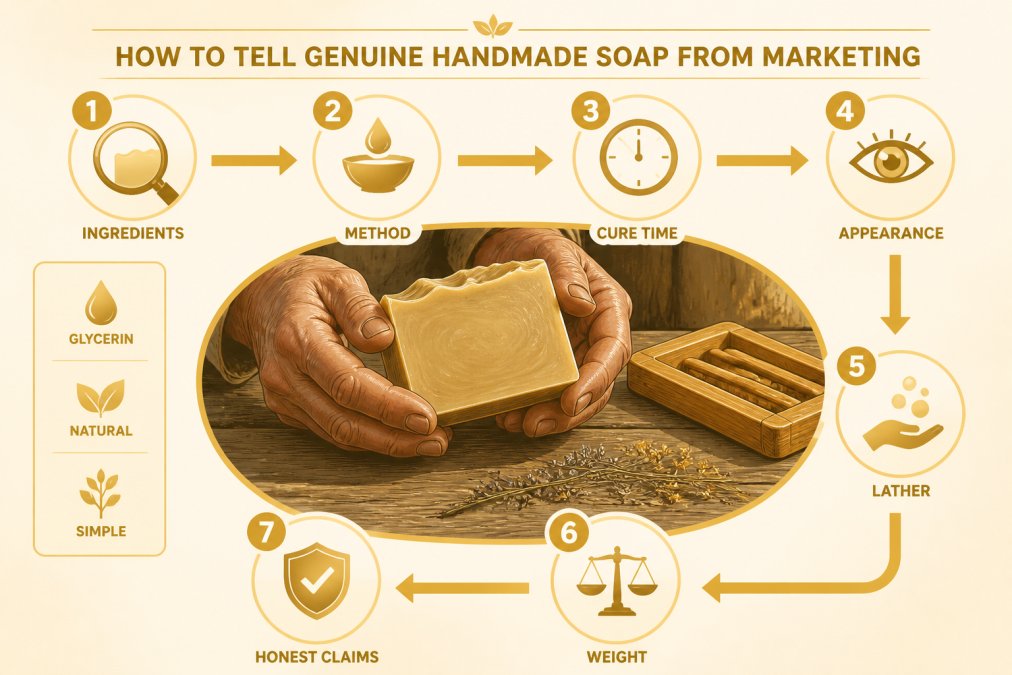
Use this checklist before you buy:
- Ingredient list: six pronounceable items beat twenty unpronounceable ones
- Process named: cold-process and small-batch are specific claims you can ask about
- Glycerin mentioned: if the maker never mentions it, ask why
- Consistency: slight color and shape variation signals real handwork
- Price honesty: a bar that claims luxury quality at drugstore prices deserves suspicion
For a fuller list of what to watch for, read the mistakes people make with natural soap.
Matching the Bar to Your Skin: Sensitive, Dry, and Scented Options
The right bar depends on your skin, not on which scent sounds nicest. Handmade soap is not automatically gentler, and "natural" is not a synonym for hypoallergenic. Essential oils, botanical additives, and even some plant oils can trigger reactions in reactive skin. Match the bar to your skin type first, then to your nose.
Dry Skin
Dry skin benefits from bars built around oatmeal, honey, shea, or a high proportion of olive oil, and from the glycerin that cold-process soap retains. Look for short ingredient lists and avoid bars with heavy fragrance loads. Our Oatmeal & Honey Bar Soap, made with colloidal oatmeal and real honey, is the bar we point people toward when itch and tightness are the main complaints.
Sensitive and Reactive Skin
Sensitive skin often does best with fragrance-free products. Our Sensitive Solutions 5-Bar Soap Pack at $21.99 is unscented and cold-processed, and is free of synthetic fragrance, dyes, and sulfates. Our single unscented Oh Naturale' bar at $6.00 is the simplest starting point if you want to test one bar before committing to a pack.
Oily Skin
Oily skin does not need a harsh, stripping bar. A well-formulated handmade bar with coconut oil cleans effectively without leaving skin tight, and skipping heavy butters and rich additives keeps the bar from feeling greasy. The goal is clean, not squeaky.
Eczema-Prone Skin
A mild, fragrance-free bar can be part of a gentle routine, but it cannot treat eczema. If skin is cracked, bleeding, oozing, or not improving with basic care, see a dermatologist.
Scent Lovers
If your skin tolerates fragrance, essential-oil bars deliver scent without synthetic fragrance. The Beach Nut Vanilla & Acai Berry bar brings shea butter and a crisp essential-oil aroma, while the Lemongrass Bar Soap offers a fresh citrus-herbal option. Patch-test a new scented bar on a small area before using it all over.
Best for: shoppers who want an unscented bar, and families buying for kids. Skip if: you want a strong fragrance or you have an active skin flare that needs medical care.
Shop by Skin Need: Picking Your First Bar
Start with your skin's biggest complaint, not the scent. If you are unsure, buy one unscented bar and one scented bar and let your skin answer the question.
If you are ready to choose, you can browse the full bar soap collection and pick by skin need. Our customers rate us 4.93 out of 5 across 462 reviews.
For a deeper comparison of how handmade and factory-made bars differ, read traditional versus factory-made natural soap.
Frequently Asked Questions
Is handmade soap better than store-bought soap?
It depends on your skin and what you want from a bar. Our cold-process soap is made with the glycerin that forms during saponification left in the bar. The Oh Naturale' Unscented bar at $6.00 is a fragrance-free option for sensitive skin.
How long does a handmade soap bar actually last?
A bar left sitting in water dissolves faster than one kept on a draining dish between uses.
Why does handmade soap cost more than drugstore bars?
Small-batch cold-process soapmaking is labor intensive. Bars are made in small runs. At $6.00 per bar, or $21.99 for a five-bar pack, these are the prices for our handmade bars.
Is cold-process soap better for dry skin?
Cold-process soap retains the glycerin created during saponification. It is not a treatment for a diagnosed condition, though. If you have eczema or psoriasis, patch test a small area first and keep expectations realistic: soap cleanses and supports moisture, but it does not replace a dermatologist's plan.
Most people have never used a bar with the glycerin still in it. That is the whole test. Try one bar from Amish Country Soap Co, made cold-process in small batches with simple, pronounceable ingredients, and let your skin decide whether handmade soap is worth it. Our 250-year family tradition, unscented sensitive-skin bars, and Oatmeal & Honey bar are all built for exactly that comparison. Get started with Amish Country Soap Co and find the bar your skin has been missing.


