


Table of Contents
- Why Essential Oils in Soap Earn Their Place
- What Essential Oils Actually Do in a Rinse-Off Bar
- The Best Essential Oils for Soap and What Each One Brings
- Essential Oil Usage Rate in Soap: The Numbers That Matter
- Essential Oil Scent Retention in Soap: Why Some Bars Fade
- Essential Oils to Avoid in Soap for Sensitive Skin
- Matching Oils to Skin Type, Allergies, and Scent Preference
- Frequently Asked Questions
Last Updated: October 19, 2026
Why Essential Oils in Soap Earn Their Place
Walk into any gift shop or farm market and you'll see the words "essential oil" printed on half the soap labels. At Amish Country Soap Co, we've been making cold-process soap in small batches for generations, and we can tell you plainly: the benefits of essential oils in soap are real, but they're narrower than the marketing suggests. Essential oils are concentrated plant extracts that carry both scent and plant chemistry into a bar of handmade soap. They deliver genuine fragrance and, in some formulations, modest skin support. They do not cure eczema, and any label implying otherwise deserves your skepticism.
Below, we'll walk through what these oils actually do in a rinse-off bar, which ones work best, how much to use, and which ones to keep away from sensitive skin. The stakes are practical: a bar that smells wonderful and treats your skin gently is worth buying twice.
What Essential Oils Actually Do in a Rinse-Off Bar
Essential oils in soap do two jobs well: they scent the bar, and they bring plant compounds into contact with skin during washing. That's the honest scope. Soap touches your skin for seconds, then rinses away, so the exposure is brief. A bar can leave skin feeling calm or cleansed, but it won't deliver the lasting treatment a leave-on lotion or salve would.
Plausible Skin Benefits and Where the Claims Stop
Lavender is traditionally associated with relaxation, tea tree with blemish-prone skin, and peppermint with a cooling sensation. Those associations are long-standing and reasonable to describe as traditional uses. What a bar of soap cannot honestly promise is medical treatment. A rinse-off product has limited contact time, and the FDA regulates drug claims strictly, so any soap marketed as curing a condition crosses a line. The FDA guidance on soap and drug claims explains the distinction clearly. We describe our bars as supporting clean, comfortable skin, not as medicine.
What Happens to Essential Oils During Soapmaking
Cold-process soapmaking involves lye, and lye is harsh. Some aromatic compounds in essential oils do degrade when they meet the alkaline environment of raw soap batter. Citrus oils are especially fragile, and their bright top notes often fade fastest. This is why scent in handmade soap is rarely as sharp as the bottle it came from. A maker who understands this builds a blend with heartier oils and accepts that some brightness will be lost during curing.
The Best Essential Oils for Soap and What Each One Brings
The best essential oils for soap are the ones that survive saponification, smell good in a bar, and suit your skin. Four stand out for reliability: lavender, tea tree, lemongrass, and rosemary with spearmint. Lavender brings a clean floral calm and blends with nearly anything. Tea tree offers a sharp, medicinal freshness traditionally used for troubled skin. Lemongrass delivers a bright citrus-herbal lift. Rosemary and spearmint combine for an invigorating, clarifying wash.
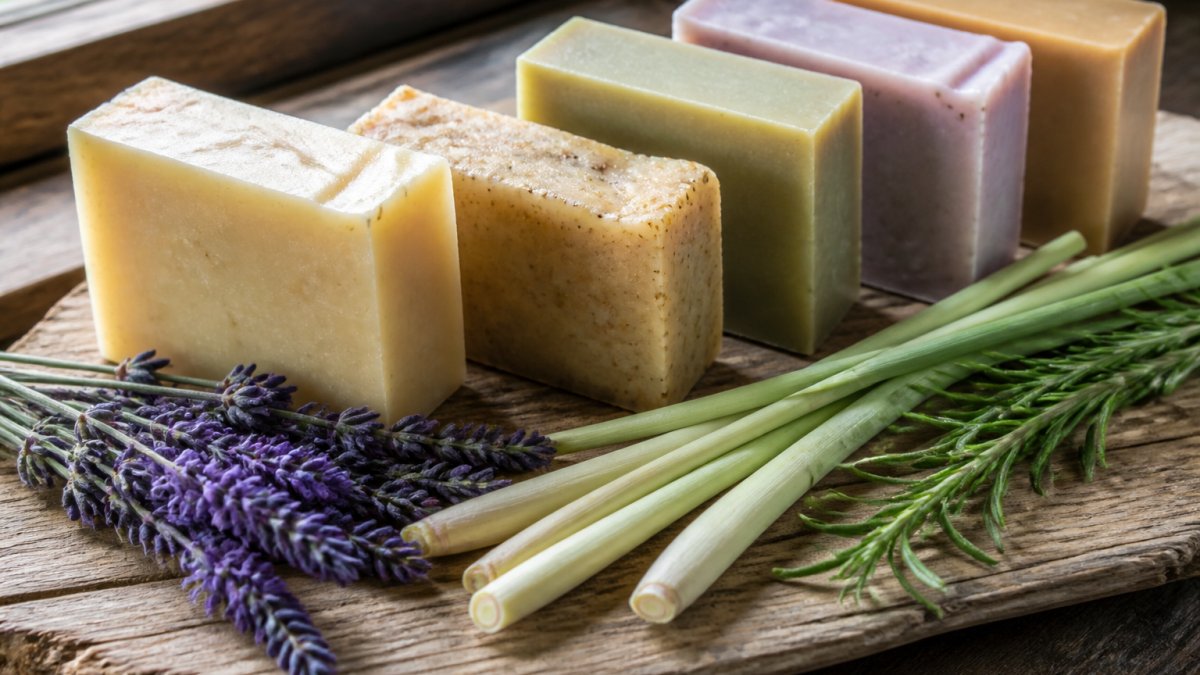
Our own bars show how these oils land in practice. The Lavender Bar Soap is scented with Bulgarian lavender essential oil for a classic floral aroma. The Lemongrass Bar Soap pairs lemongrass essential oil with ground lemongrass for a crisp finish. The Bee-Utiful Bar Soap combines tea tree oil with real honey for sensitive, blemish-prone skin. Each is a plain example of a single oil doing its job well.

Essential Oil Usage Rate in Soap: The Numbers That Matter
Usage rate is where most soapmaking mistakes happen, and it is the one number a buyer or new maker should understand before trusting any label. In cold-process soap, essential oil is measured as a percentage of the total oil weight in the batch, not of the finished bar, and not of the water. A 2-pound batch of base oils, for example, contains about 32 ounces of oil, so a 3% usage rate works out to roughly 0.96 ounces of essential oil by weight. That is a small amount, and it is intentional.
The practical ceiling is set by two things: how much the bar needs for scent, and how much skin can tolerate. Most makers settle between about 1% and 3% for a single oil, and lower for the potent ones. Some oils are far more concentrated in irritating compounds than others, so a rate that smells pleasant with lavender can sting with cinnamon, clove, or heavy peppermint. Rather than memorize a single number, build the habit of checking each oil against a published dilution reference before it goes into the pot. The essential oil dilution and safety guidance from a reputable aromatherapy source is a reasonable starting point, and the IFRA Standards on fragrance ingredient limits explain why some materials carry restricted maximums in leave-on and rinse-off products.
Two cautions matter more than the arithmetic. First, more oil does not reliably mean more scent. Excess essential oil can irritate skin, accelerate trace, and discolor the bar, and much of the extra degrades during saponification and cure anyway. Second, dilution limits are not a guarantee of gentleness for every person. Sensitization, where repeated exposure turns a tolerable oil into a reaction, is a real risk with some materials, which is why patch testing and conservative rates belong in every recipe.
Essential Oil Scent Retention in Soap: Why Some Bars Fade
Scent fading is not a flaw in the recipe so much as chemistry doing what chemistry does. Three forces work against essential oil in a bar: heat, alkalinity, and time. Understanding each one tells you why a bar that smelled vivid on cut day can smell faint by month three, and what you can honestly do about it.
Heat. Cold-process soap generates its own heat during saponification, and the batter can climb well above room temperature in the mold. Volatile aroma compounds, the light, bright molecules that give citrus its sparkle, evaporate or break down faster as temperature rises. That is why a lemongrass or orange bar often loses its top notes first while a resinous or floral oil holds on.
Lavender Bar Soap | Bulgarian Lavender Essential Oil →
Alkalinity. Raw soap batter is strongly alkaline, and some essential oil constituents react with that environment rather than surviving it intact. Esters, which are common in many fruity and floral oils, can hydrolyze under alkaline conditions. The result is a scent that reads flatter or soapier than the bottle did, even before the bar is cured.
Time and cure. Curing is not just drying. Over four to six weeks, water evaporates, the bar hardens, and the scent profile settles. Some initial sharpness leaves with the water; what remains is usually softer and rounder. A bar that seems weak at one week may be closer to its final character at six weeks, or it may keep fading. The difference depends on which oils you chose.
What actually helps:
- Choose oils with heavier, less volatile molecules, lavender, rosemary, tea tree, patchouli, and cedarwood tend to outlast bright citrus.
- Anchor a fragile top note with a heartier base oil rather than simply adding more of the fragile one.
- Accept that citrus will fade and plan for it; a lemon bar is often best enjoyed in its first months.
- Cure fully before judging scent, then judge again at the point of sale or use.
- Store finished bars away from heat and direct light, which both accelerate loss.
What does not help is chasing a stronger bottle scent with a higher usage rate. Extra oil that the lye and cure destroy does not come back, and the portion that survives may push the bar past a comfortable rate for skin. The honest expectation is a bar that smells pleasant and true to its oils, not one that matches the intensity of the bottle it came from.
Essential Oils to Avoid in Soap for Sensitive Skin
The essential oils to avoid in soap for sensitive skin are the ones most likely to trigger irritation or a reaction: strong citrus oils, cinnamon and clove, and heavy doses of peppermint. Citrus oils also carry phototoxicity concerns, meaning skin exposed to sunlight after contact can react. Peppermint's cooling tingle is pleasant for some and uncomfortable for others. For anyone with eczema, rosacea, or a history of reactions to "natural" products, patch testing a small area first is the sensible step. Our Bee-Utiful Bar Soap was built with sensitive skin in mind, pairing tea tree with honey rather than a long list of strong oils.

Matching Oils to Skin Type, Allergies, and Scent Preference
Matching oils to your skin and nose is the last and most personal step. Dry or sensitive skin does well with lavender and gentle florals. Oily or blemish-prone skin often suits tea tree. Anyone who wants an uplifting wash can reach for lemongrass or rosemary and spearmint. If you have a known allergy to a specific plant, read the ingredient list and skip that bar entirely. Scent preference matters just as much: a bar you love the smell of gets used, and one you don't sits in the shower until it dissolves.
Choosing soap for sensitive or reactive skin is a real challenge, and the wrong bar can leave you worse off than before. At Amish Country Soap Co, we make cold-process bars in small batches with simple, pronounceable ingredients and pure essential oils, backed by a 250-year family tradition and a 4.93 average rating across 462 customer reviews. Whether you need calming lavender, clarifying tea tree, or an invigorating rosemary and spearmint wash, you can shop by skin need and find a bar built for your routine.
Frequently Asked Questions
Can you use essential oils in soap?
Yes, and most handmade cold-process bars rely on them for scent. The key is using skin-safe amounts and choosing oils suited to your skin. Some oils, like cinnamon or clove, need far lower amounts because they can irritate skin.
Do essential oils retain their scent in cold-process soap?
Partly, and less than many makers expect. Essential oils are volatile, and the lye and heat of cold-process soapmaking burn off some fragrance. Light citrus oils like lemon and sweet orange fade fastest, often within a few months. Heavier oils such as patchouli, lavender, and rosemary hold better. Anchoring a bright oil with a base note, and letting bars cure the full four to six weeks, improves essential oil scent retention in soap noticeably.
How much essential oil should you use in soap?
Stay at the lower end for children, the elderly, and anyone with sensitive skin. Strong oils like peppermint, cinnamon, and clove need much lower rates. Too much oil does not make a stronger bar; it wastes money, can soften the soap, and raises the risk of skin irritation.
What essential oils should you avoid in soapmaking?
Skip phototoxic oils like cold-pressed bergamot, lime, and bitter orange at high levels, since they can cause reactions when skin meets sun. Cinnamon, clove, oregano, and wintergreen are best kept very low or left out, as they irritate easily. Avoid anything your household is allergic to, and be cautious with citrus in general. Fragrance-free bars are a safer choice for very reactive skin, babies, and anyone with a known sensitization.


