


Last Updated: November 22, 2026
Quick Summary
Natural skincare for elderly skin should cleanse without stripping, hydrate deeply, and support the skin barrier, since aging skin thins, produces less oil, and repairs more slowly. Choose the mildest cleanser and moisturizer you can find, then add one product at a time so you know what caused any reaction.
- Skin barrier function changes with age, so a harsh cleanser can leave skin tight, itchy, and flaky.
- Stripping cleansers and daily exfoliation are the two most common causes of avoidable flare-ups in mature skin.
- Patch test a pea-sized amount on the inner forearm for 24 hours, then repeat for two more days.
- Cleanse twice daily, exfoliate once or twice a week at most, and moisturize twice daily.
- Skip lemon juice, baking soda, and undiluted essential oils, which commonly cause burns and contact dermatitis on thin skin.
Table of Contents
- Why Elderly Skin Needs a Different Kind of Natural Skincare
- Natural Skincare for Mature Skin: What to Look For in Every Product
- Natural Anti-Aging Ingredients That Actually Earn Their Place
- Natural Anti-Aging Skin Care Home Remedies Worth Trying
- The Best Natural Skin Care Products for Over 50: A Comparison
- A Gentle Daily Routine for Elderly Skin, Step by Step
- Choosing Your First Natural Skincare Set
- Frequently Asked Questions
Why Elderly Skin Needs a Different Kind of Natural Skincare
Natural skincare for elderly skin is not the routine you used at forty. Skin thins, oil production drops, and repair slows, so cleansers and creams that once worked can now sting, flake, or stop helping. At Amish Country Soap Co, we make gentle, plant-based products for mature skin.
Skin barrier function changes with age, and a harsh cleanser that strips oil can leave skin feeling tight, itchy, and flaky.
How Aging Skin Changes: Thinning, Dryness, and Slower Repair
Three changes drive almost everything you notice in the mirror. The outer layer thins, sebum production declines, and the barrier that holds moisture in repairs itself less efficiently. The result is dry skin that feels tight after washing, deeper fine lines, and crepey skin on the neck and hands.
None of this means your skin is beyond help. It means the goal shifts from aggressive correction to steady, gentle support.
Why Harsh Ingredients Cause More Trouble After 65
What most guides miss is that irritation compounds.
Start with the mildest cleanser and moisturizer you can find, then add one product at a time so you know exactly what caused any reaction.
Watch out: stripping cleansers and daily exfoliation are the two most common causes of avoidable flare-ups in mature skin. If your face feels tight after washing, the product is too harsh.
Natural Skincare for Mature Skin: What to Look For in Every Product
Natural skincare for mature skin should do three things: cleanse without stripping, hydrate deeply, and support the skin barrier. Products promising more are usually asking your skin to tolerate more than it should.
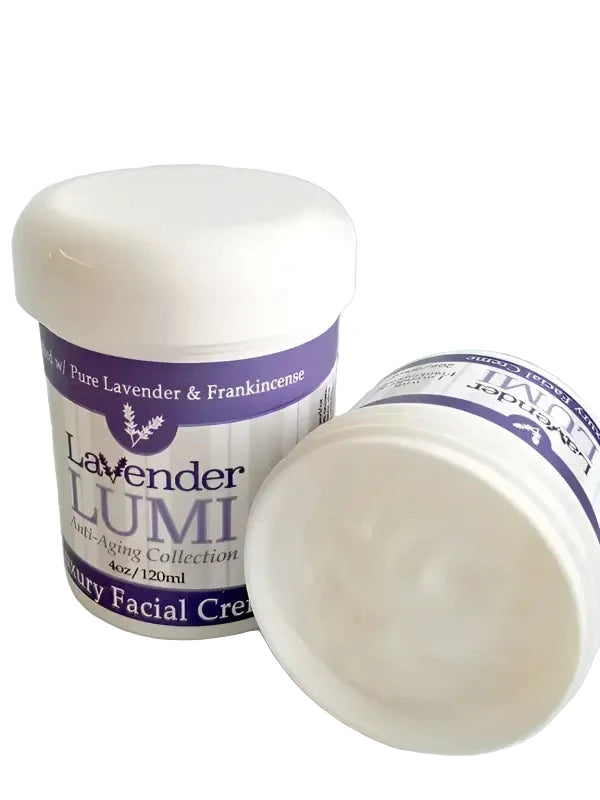
Our Lavender Lumi Moisturizer is built around frankincense and Bulgarian lavender oils, and is designed to hydrate without leaving a greasy feel.
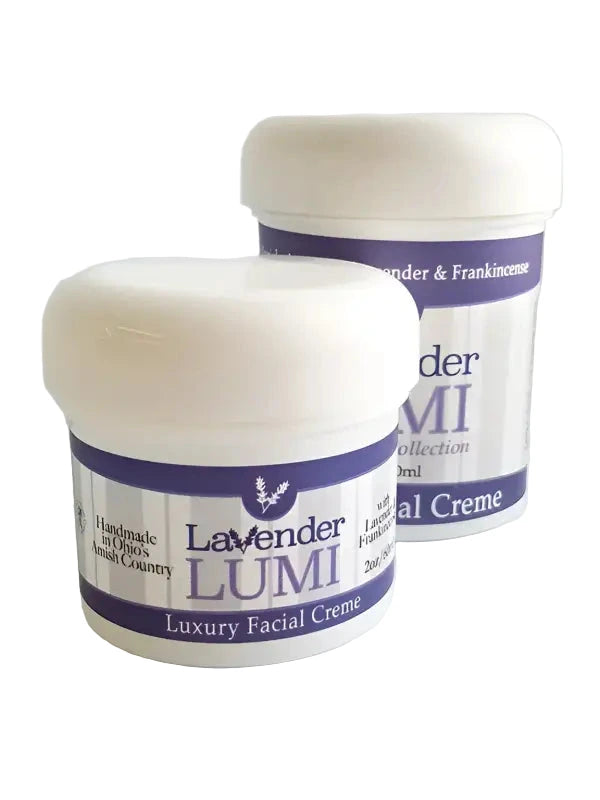
A few selection rules we would give a family member:
- Choose fragrance from essential oils over synthetic perfume when you can
- Prefer creams and lotions over gels for dry, dehydrated skin
- Buy the smallest size first and patch test before committing
Natural Anti-Aging Ingredients That Actually Earn Their Place
Natural anti-aging ingredients are worth using when they support hydration and barrier repair, not when they promise to erase wrinkles.
Ingredients Worth Seeking Out
- Glycerin is a common humectant that draws water into the skin
- Hyaluronic acid is a common hydrating ingredient
- Rosehip oil is a plant oil often used for skin care
Our Simply Soften Moisturizer combines aloe, rosehip, and chamomile in a lightweight, non-comedogenic formula.
The Limits of Natural Ingredients
Here is where we part ways with a lot of the marketing. "Natural" does not automatically mean gentle or effective for every concern. Essential oils can irritate sensitive skin, and botanical ingredients can vary.
Natural Anti-Aging Skin Care Home Remedies Worth Trying
Natural anti-aging skin care home remedies work best when they are boring and consistent.
- Cool compress before moisturizer: calms itching and redness on reactive skin
- Oatmeal paste: soothes irritated patches; rinse gently after a few minutes
- Extra virgin olive oil on very dry patches: a small amount at night, not all over the face
For dry, itchy skin on the body, our guide to natural body lotion for dry, itchy skin covers which plant oils and application habits actually help.
One caution: skip lemon juice, baking soda, and undiluted essential oils. They are popular online and they are a common cause of burns and contact dermatitis on thin skin.
The Best Natural Skin Care Products for Over 50: A Comparison
The best natural skin care products for over 50 are the ones with short ingredient lists, real hydration, and a price that lets you use them every day.
| Product | Price | Key Ingredients | Best For |
|---|---|---|---|
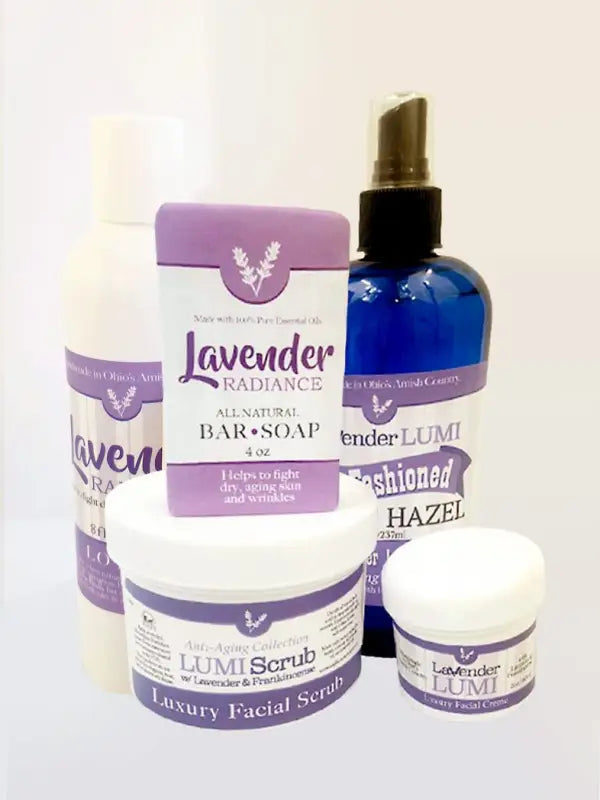
| Lavender Lumi Skincare System | $55.00 | Frankincense, lavender, brown sugar scrub | A complete routine in one box |
| Lavender Lumi Moisturizer 2 oz | $14.00 | Frankincense, Bulgarian lavender | Daily facial hydration |
| Lavender Lumi Moisturizer 4 oz | $23.00 | Frankincense, Bulgarian lavender | Regular use, better value |
| Simply Soften Moisturizer 2 oz | $13.00 | Aloe, rosehip, chamomile | Sensitive, reactive skin |
| Simply Soften Moisturizer 4 oz | $23.00 | Aloe, rosehip, chamomile | Sensitive skin, larger size |
Price
The Lavender Lumi Skincare System bundles bar soap, moisturizer, exfoliating scrub, lotion, and facial toner at $55.00, and its frankincense and lavender formula is made for dry to mature skin.
Simply Soften is an option for sensitive skin, with aloe, rosehip, and chamomile, and is available in a 2 oz size for $13.00.
A Gentle Daily Routine for Elderly Skin, Step by Step
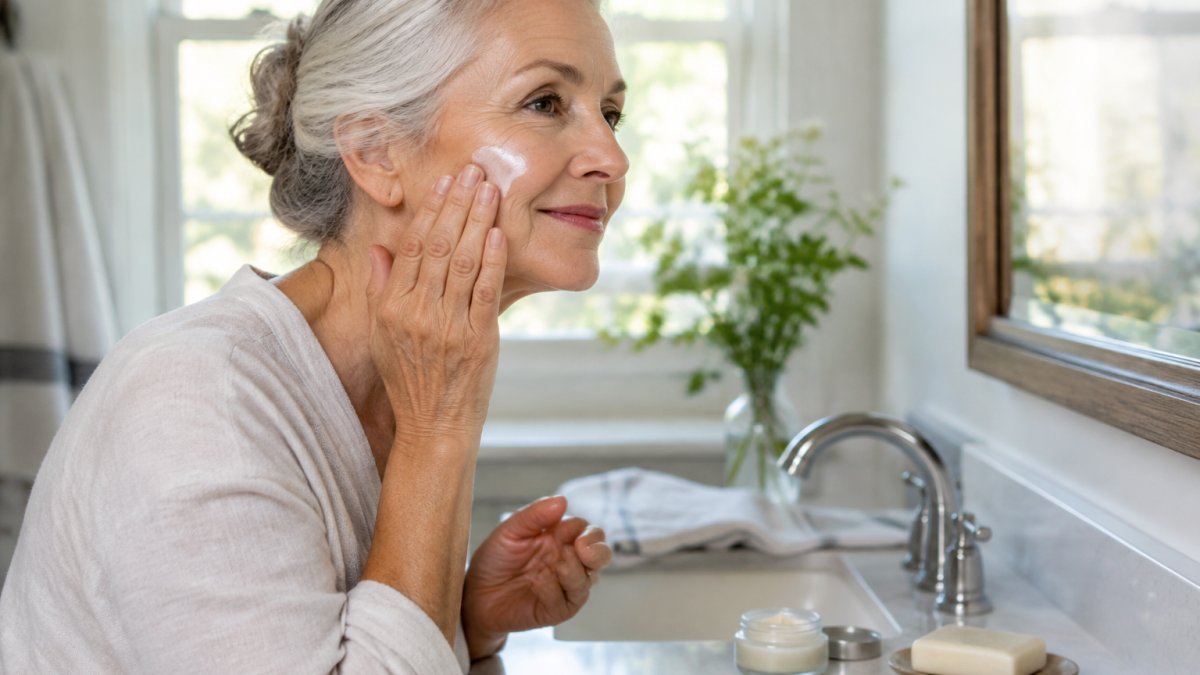
A gentle routine for elderly skin takes about five minutes, twice a day. Consistency matters far more than the number of products, and the routine should be simple enough to repeat on a bad day.
- Drying alcohols. Denatured alcohol and alcohol denat. appear in toners and can strip oil from skin that is already underproducing it.
- Acids and retinoids in high concentrations. Glycolic acid, salicylic acid, and retinol can be useful, but on fragile skin they cause stinging and peeling more easily. Start at the lowest strength and use every other night.
Medications That Change the Picture
Some medications make skin more reactive or more prone to dryness, bruising, and sun sensitivity. Common examples include diuretics, blood thinners, and certain antibiotics such as tetracyclines and fluoroquinolones, which are well known to increase photosensitivity. This is not a reason to stop a prescribed medication, but a reason to ask your pharmacist whether any of your medications affect your skin or your response to sunlight.
When Dryness Is Not Just Dryness
Most dryness on mature skin responds to a thicker moisturizer and a gentler cleanser within a week or two. Some changes do not, and those deserve a clinician's eyes rather than another cream:
- A spot that is changing shape, color, or size, or that bleeds and will not heal
- A sore or rash that persists for more than two weeks despite gentle care
- New itching that spreads or comes with a rash, especially after a new product or medication
Those signs are not a skincare problem, and treating them at home delays the assessment that actually helps.
For readers managing psoriasis-prone skin, our guide to natural soap for psoriasis-prone skin explains which ingredients soothe and which to avoid.
Choosing Your First Natural Skincare Set
The simplest path is to start with one cleanser and one moisturizer, use them for a month, and judge by how your skin feels rather than the packaging.
Finding natural skincare gentle enough for everyday use after 65 takes some looking.
Get started with Amish Country Soap Co and give your skin the gentle, steady care it has been asking for.
Frequently Asked Questions
What is the best skincare for elderly people?
The best routine is simple and gentle: a mild cleanser, a hydrating moisturizer, and daily sun protection. Look for short ingredient lists built on plant oils, glycerin, aloe, and soothing extracts like chamomile. Avoid fragrances and harsh exfoliants that strip the skin barrier. A two-step morning routine and a two-step evening routine are usually enough. Consistency matters more than the number of products.
Which natural anti-aging ingredients are gentle enough for sensitive mature skin?
Rosehip oil, aloe vera, chamomile, glycerin, and bakuchiol are common plant-based ingredients in natural skin care. Frankincense and lavender essential oils appear in many natural facial creams, though anyone with known sensitivities should patch test first. Start with one new product at a time and wait a week before adding another so you can tell what works.
How should older adults care for dry, sensitive skin?
Cleanse with lukewarm water and a gentle bar soap rather than hot water and foaming washes. Apply moisturizer while skin is still slightly damp. Use a richer cream at night and a lighter lotion under makeup during the day. Run a humidifier in winter and drink water throughout the day; dry skin often reflects both external and internal dehydration.
Are natural anti-aging skin care home remedies safe for elderly skin?
Some are, with care. Many people use cool compresses, aloe vera gel, or oatmeal baths for general comfort on dry skin. Avoid undiluted essential oils, lemon juice, and baking soda pastes, which can burn thin aging skin. Patch test anything new on your inner arm for 24 hours. Home remedies work best as a complement to a basic cleanser-and-moisturizer routine, not as a replacement for it.
How can older adults protect aging skin from sun damage?
Daily sunscreen is an important step in skin care. Choose a broad-spectrum SPF 30 or higher and apply it every morning, even on cloudy days. Reapply after two hours outdoors. Add a wide-brimmed hat and long sleeves for longer exposure. Sun damage accumulates over time, so protecting skin now is worthwhile.
What skin changes should prompt a call to a doctor?
See a dermatologist for a new or changing mole, a sore that will not heal within a few weeks, sudden widespread rash, or skin that becomes painful, bleeds, or swells after trying a new product. Older adults on multiple medications should also ask about photosensitivity, since some drugs make skin react more strongly to sun. Persistent itching without a visible cause is worth checking too.


