


Last Updated: November 24, 2026
Quick Summary
Artisan soap lasts about one to two years when stored unopened, and roughly four to six weeks of daily use once a bar is in the shower. A bar that dries fully between uses lasts noticeably longer than one left sitting in water.
- Shelf life is how long a bar stays good in storage; bar life is how many weeks it survives daily washing.
- A standard bar used daily in a draining dish lasts about 4-6 weeks.
- Store homemade soap in a cool, dry, dark place with airflow around each bar.
- A bar left in a puddle may lose a third or more of its life to dissolution.
- Wrap travel bars in cloth or paper, not sealed plastic, and let them dry fully first.
Table of Contents
- How Long Does Artisan Soap Last?
- How Long Do Bars of Soap Last Unopened?
- How Long Should a Bar of Soap Last One Person?
- How Long Does Cold Process Soap Take to Cure?
- How to Store Homemade Soap
- How to Tell Rancidity from Harmless Aging
- Choosing a Bar That Goes the Distance
- Frequently Asked Questions
How Long Does Artisan Soap Last?
Artisan soap lasts about one to two years when stored unopened, and roughly four to six weeks of daily use once a bar is in the shower. Those two numbers answer two very different questions. One is about shelf life. The other is about how fast a bar wears down under running water. Most guides blur them together, which is why so many people are confused about how long does artisan soap last.
Here is the short version: a well-made bar is not fragile. Store it dry and it keeps for a long time. Use it daily and it lasts weeks, not days.
Shelf Life vs. In-Shower Bar Life
Shelf life is how long a bar stays good in storage, before you ever unwrap it. Bar life is how many weeks it survives daily washing. They are not the same thing, and mixing them up leads to bad decisions.
A bar with a two-year shelf life can still vanish in a month if it sits in a puddle. A bar that lasts six weeks in the shower can go rancid in a damp cabinet. Both facts are true at once.
So judge your soap on two clocks:
- Storage clock: how long it stays fresh on the shelf
- Use clock: how long it lasts once it gets wet every day
Keep both in mind and the rest of this guide makes sense.
How Long Do Bars of Soap Last Unopened?
Handmade soap is often kept for a long stretch when stored cool and dry, though exact shelf life depends on the recipe and storage conditions.
What shortens that window? Heat, humidity, and light. A bar left in a hot garage or a steamy bathroom cabinet ages faster than one kept in a cool, dark closet.
Aging is not the same as spoiling, and a bar that has sat for some time may smell a little softer and look a little duller.
Ingredient-Specific Shelf Life
Not every bar ages at the same speed. The oils in the recipe matter.
- Olive-oil-heavy bars: slow to age, very stable, often the longest keepers
- Bars with nut and seed oils: stable but a bit softer, so store them dry
- Bars with essential oils: scent fades over time, even when the soap is fine
- Bars with fresh additives like fruit or milk: shorter window, use sooner
- Unscented bars: no fragrance to fade, so they age quietly and predictably
A simple rule: the simpler the recipe, the more predictable the shelf life.
How Long Should a Bar of Soap Last One Person?
How long a bar lasts for one person depends on bar size, daily use, and how it is stored. A larger bar lasts longer. A bar that dries between uses lasts longer than one that sits wet.
Bar weight is the biggest factor. A bigger bar simply has more soap to give. Water exposure is the second. A bar in a draining dish lasts far longer than one left in a puddle.
Here is a rough way to think about it:
| Bar Size | Daily Use, Drained | Daily Use, Left Wet |
|---|---|---|
| Small bar | 3-4 weeks | 2-3 weeks |
| Standard bar | 4-6 weeks | 3-4 weeks |
| Large bar | 6-8 weeks | 4-5 weeks |
Daily Use, Drained
These are estimates, not promises. Your water, your habits, and your dish all shift the number.
A Simple Way to Estimate Your Bar Life
Most guides give a single range and stop there. A more useful approach is to estimate from four inputs: bar weight, number of users, showers per day, and drying time. You do not need a calculator to get close; a simple mental model works.
Start with weight. More ounces mean more washes, roughly in proportion.
Then count users and showers. One person showering once a day uses less soap per week than two people showering daily. If you share a bar, divide the expected life by the number of regular users.
Then factor in drying time. A bar that dries fully between uses can last noticeably longer than one that stays damp. A draining dish, a wire rack, or a hanging bag all help. A bar left in a puddle may lose a third or more of its life to dissolution.
Scale from there:
- Double the weight and you roughly double the weeks, if everything else stays the same.
- Add a second daily user and you roughly halve the weeks.
- Switch from a draining dish to a wet ledge and you may lose a week or more.
This is an estimate, not a guarantee. Water hardness, soap recipe, and how much lather you like all matter. But the model gives you a way to compare bars and storage setups instead of guessing.
How Long Does Cold Process Soap Take to Cure?
Cold-process soap is typically cured before use, which lets extra water evaporate and the bar harden (How soap is made).
How to Store Homemade Soap
Store homemade soap in a cool, dry, dark place with airflow around each bar. Keep it out of humid bathrooms and away from heat.
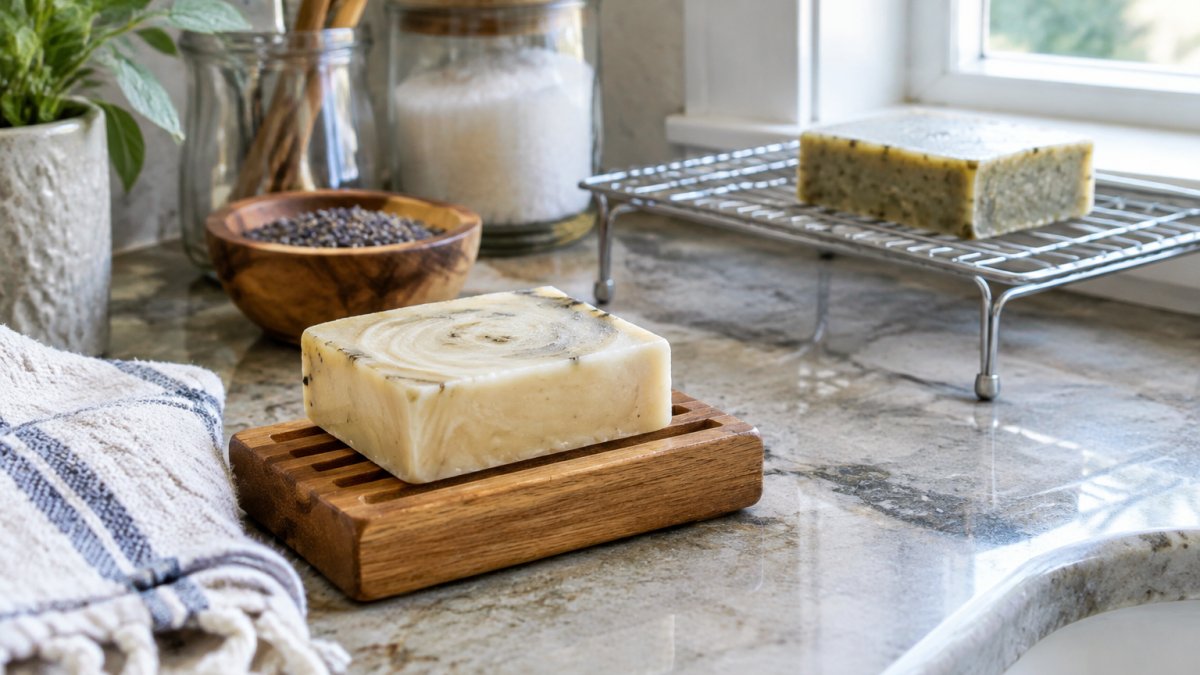
The goal is to control four things: moisture, airflow, temperature, and light. Each one changes how fast a bar ages.
- Moisture: water is the main enemy. A bar that stays damp softens, dissolves faster, and can grow surface film. Aim for a dry surface between uses and a dry environment in storage.
- Airflow: moving air carries moisture away. Leave space between stored bars and avoid sealed containers that trap humidity.
- Temperature: heat speeds chemical changes and softens the bar. A steady, moderate temperature is better than a hot garage or a windowsill.
- Light: direct sun fades scent and can discolor the surface. A dark cupboard or a closed box protects both color and fragrance.
A few habits make a real difference:
- Keep bars in a linen closet or a dry cupboard, not the shower
- Leave space between bars so air can move
- Skip plastic wrap for long storage; paper breathes better
- Keep them out of direct sun and away from radiators
For more on gentle ingredients and skin care, our guide to simple ingredients for healthy skin pairs well with these storage tips.
Storage by Setting
Where you keep soap changes the advice. The theme is the same everywhere, dry, dark, and airflow, but each setting has its own failure mode.
In the shower. Use a draining soap dish that lets water run off and air reach the bottom of the bar. A dish with raised ridges or a wire rack works better than a flat tray. Never leave a bar in standing water; a bar that sits in a puddle can soften and dissolve in days rather than weeks.
In the bathroom cabinet or on the sink. A bathroom is the most humid room in most homes, so a closed cabinet can trap moisture. Keep the bar on a draining dish, away from the shower spray, and crack the cabinet door if you store bars there.
In the linen closet or a dry cupboard. This is the best long-term spot. Stack bars loosely with paper between them, or stand them on edge so air reaches all sides. Avoid stacking heavy items on top of soft bars. A labeled box or basket keeps bars organized and lets you rotate older stock first.
In a basement or garage. Avoid these unless the space is reliably dry. Humidity and temperature swings speed spoilage, and a bar stored in a damp basement can go rancid long before its time. If you must use a garage, keep bars in a sealed, dry container with a moisture absorber and check them monthly.
In travel. Wrap the bar in a cloth or paper bag, not a sealed plastic bag. A sealed bag traps moisture from the last use and can leave the bar soft and smelly. A small tin with a few ventilation holes or a fabric pouch is a better choice. Let the bar dry fully before packing it.
In packaging for sale or gifting. Paper wraps, shrink bands with a vent hole, and boxes that allow some air exchange are common. Fully sealed plastic can trap moisture if the bar was not fully cured. If you store unopened bars, keep them in a dry, dark place and rotate stock so older bars are used first.
Watch out: a bar that looks dry on the surface can still hold moisture inside if it was wrapped too soon after curing. Give cured bars a few days of open air before long-term packaging.
How to Tell Rancidity from Harmless Aging
Watch out for the real warning signs:
- A sour or "off" smell that lingers
- Soft, sticky, or weeping spots
- Dark spots that grow and smell bad
When in doubt, trust your nose. A clean, mild scent means the bar is fine. A sharp, greasy smell means it is time to let it go.
Choosing a Bar That Goes the Distance
Choosing a bar that goes the distance comes down to three things: a firm, well-cured bar, a simple recipe, and smart storage. Pick a bar made to last and treat it well, and you get real value from every ounce.
Our unscented sensitive skin bar is a no-fragrance option designed for sensitive skin. If you love a classic scent, our lavender bar is scented with Bulgarian lavender essential oil. Want to try a few and compare? Our customer favorite 5 pack lets you test several bars. Once you have picked a favorite, use our store locator to find a shop near you.
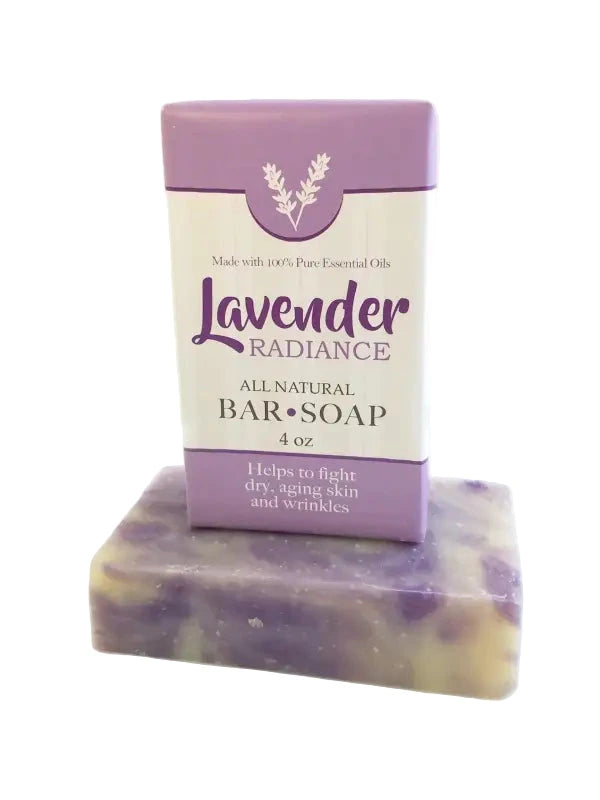
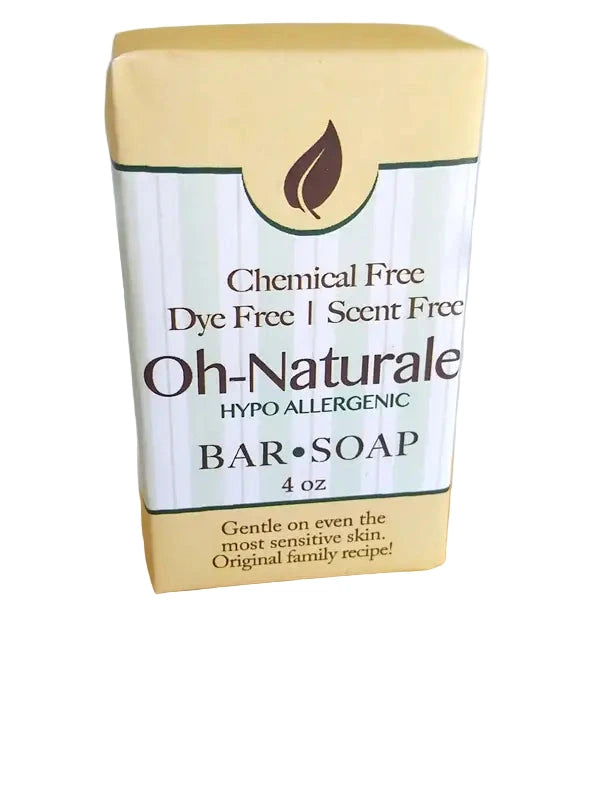
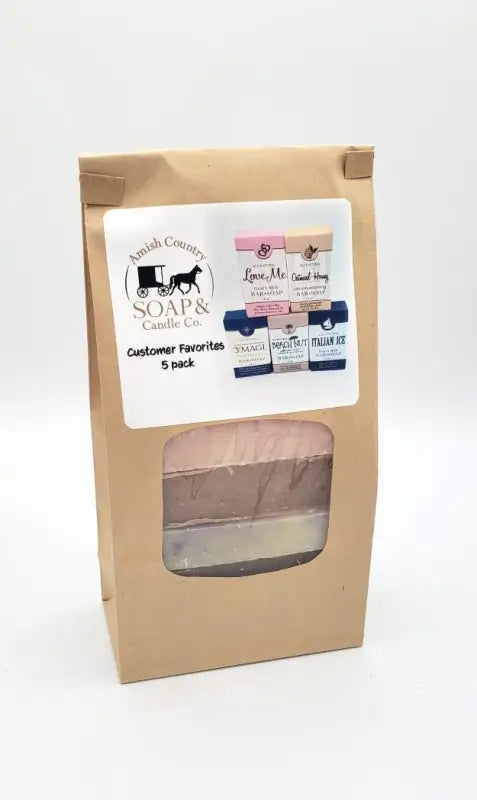
The gap between a bar that lasts three weeks and one that lasts eight often comes down to cure, recipe, and storage, not luck. At Amish Country Soap Co, we cold-process every bar in small batches using simple, pronounceable ingredients, and we hand-pour each one with a 250-year family tradition behind it. Our bars are made to hold up, with rich lather and no aluminum, parabens, or harsh chemicals. Get started with Amish Country Soap Co and shop by skin need to find a bar that lasts.
Frequently Asked Questions
Is it safe to use 10 or 20 year old soap?
Soap that old is usually safe in the sense that it will not make you sick, but it will not clean or feel the way it did when fresh. If the bar smells like crayons or old oil, or has visible dark patches, it has likely gone rancid and should be discarded. A bar that still smells clean and looks uniform can generally be used.
How long do bars of soap last unopened?
Unopened bars are best kept in a cool, dry place, and storage conditions affect how long they stay at their best. Store unopened bars in a breathable wrapper or a cardboard box, away from humidity and direct light, and write the batch date on the box so you know what to use first.
How long does a bar of soap last one person with daily use?
How long a bar lasts depends on bar size, how often it is used, and whether it dries between uses. A bar that sits in a puddle of water may wear down faster, while a draining soap dish can help it last longer.
How do you store handmade soap to make it last?
Keep handmade soap dry, cool, and out of direct sunlight. For unopened bars, use a breathable wrapper or cardboard box in a closet or cabinet, not a sealed plastic bag that traps moisture. For bars in use, choose a soap dish that drains water away from the bar, rinse off lather after each shower, and let the bar air-dry between uses. In humid bathrooms, rotate two bars so each one has a full day to dry.


