


Last Updated: November 1, 2026
Quick Summary
A natural salve for muscle aches is a thick, oil-based topical balm made from infused botanical oils, waxes, and butters that you massage into sore muscles for temporary relief. It offers comfort for everyday tired or stiff muscles but will not heal a torn muscle. Apply a small amount to clean, dry skin and massage in slow, firm strokes.
- Warming salves suit stiff, tight muscles, while cooling salves tend to suit fresh soreness after activity.
- A basic recipe uses 1 cup infused oil, 1 to 1.5 oz beeswax, 2 tbsp shea butter, and 30 to 40 drops essential oils.
- For adults, a common starting dilution range for a muscle rub is 1 to 3 percent essential oil.
- Patch test by applying a small amount to your inner forearm and waiting 24 hours before wider use.
- Seek medical evaluation if pain lasts more than a week or keeps getting worse.
Table of Contents
- What a Natural Salve for Muscle Aches Does and How to Use It
- Ingredients That Make a Salve Work: Herbs, Oils, and Bases
- How to Make a DIY Muscle Salve at Home
- Essential Oils for Sore Muscles: Safe Dilution and Blending
- Building a Herbal Muscle Rub That Fits Your Needs
- A Natural Remedy for Leg Cramps and Restless Legs
- Safety, Patch Testing, and When to See a Doctor
- Choosing a Handcrafted Salve or Making Your Own
- Frequently Asked Questions
What a Natural Salve for Muscle Aches Does and How to Use It
A natural salve for muscle aches is a thick, oil-based topical balm made from infused botanical oils, waxes, and butters that you massage into sore muscles for temporary relief. At Amish Country Soap Co, we make our salves in small batches, with simple, pronounceable ingredients.
A salve will not heal a torn muscle. Its role is to offer comfort for everyday tired or stiff muscles.
Warming vs. Cooling: Choosing Your Sensation
Which one you pick depends on the ache:
- Stiff, tight muscles often respond well to warming salves
- Fresh soreness after activity tends to suit a cooling sensation
- Chronic tension may call for a blend of both
Many people keep two jars on hand and rotate between them.
How to Apply a Salve for Best Results
Start with clean, dry skin. Scoop a small amount onto your fingertips and warm it between your hands first. Then massage it into the sore area using slow, firm strokes for a minute or two.
A few rules worth following:
- Use a small amount at first, especially with warming salves
- Massage in circles, working toward the heart
- Reapply as needed, but respect the label directions
- Wash your hands after use, and avoid touching your eyes
Ingredients That Make a Salve Work: Herbs, Oils, and Bases
A good herbal salve has three parts: the botanicals that do the work, the carrier oil that carries them, and the wax or butter that gives it body. Get those three right and you have a balm worth keeping on the nightstand.
Botanicals for Sore Muscles
Traditional herbal remedies lean on a short list of trusted plants. You will see these names again and again:
- Arnica for bumps, bruises, and everyday muscle soreness
- Cayenne pepper for a warming sensation
- Ginger for gentle heat and comfort
- Peppermint for a cooling effect
You do not need all of them. Two or three well-chosen botanicals make a better salve than a long, muddled list.
Carrier Oils, Beeswax, and Shea Butter
The base is what makes a salve feel good on the skin. Olive oil and avocado oil are classic carrier oils for infused blends. Jojoba and sweet almond oil absorb nicely and suit sensitive skin.
The balance matters. Too much wax and the salve drags on the skin. Too little and it turns to liquid in a warm room.
How to Make a DIY Muscle Salve at Home
Making a DIY muscle salve at home is a hands-on process that can be done with a few simple steps. The process is simple: infuse, melt, blend, and jar.
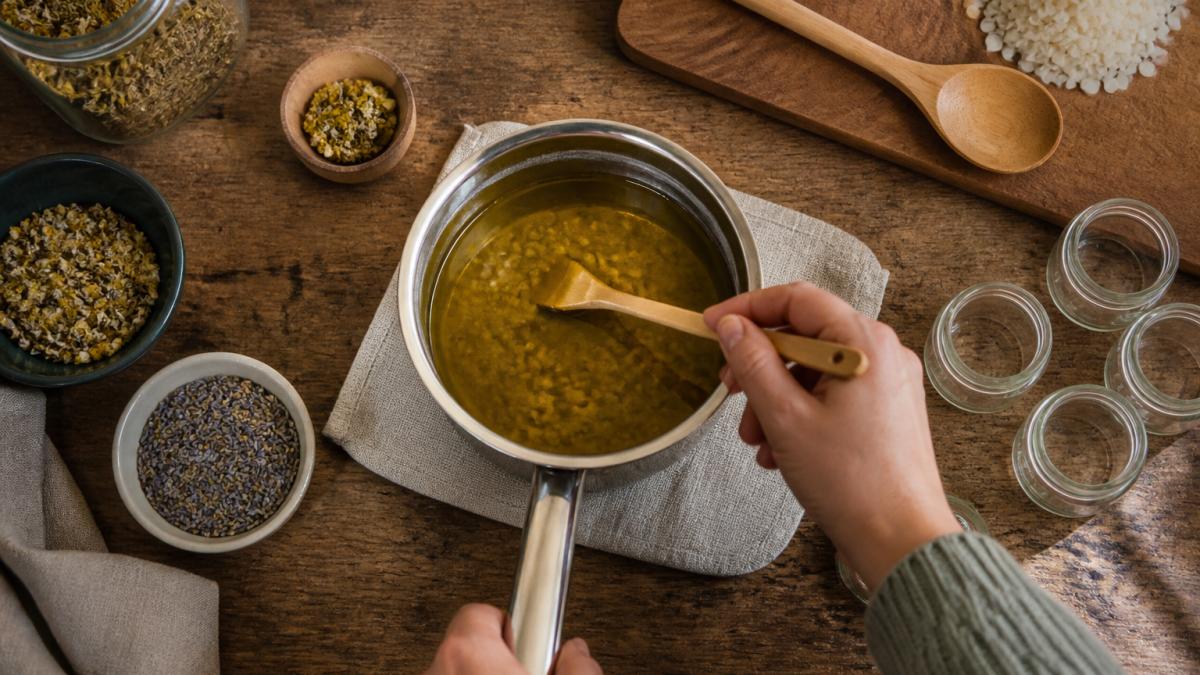
You can skip the infusion step and use a ready-made carrier oil if you are short on time. The salve still works well.
Recipe Proportions and Step-by-Step Instructions
| Ingredient | Amount | Purpose |
|---|---|---|
| Infused oil | 1 cup | Carries the botanicals |
| Beeswax | 1 to 1.5 oz | Gives firm texture |
| Shea butter | 2 tbsp | Adds richness and soothing feel |
| Essential oils | 30 to 40 drops | Scent and sensation |
Step-by-step:
- Warm the infused oil and beeswax in a double boiler over low heat until the wax melts.
- Stir in the shea butter and remove from heat.
- Let the mix cool for a minute, then add your essential oils.
- Stir well and pour into clean glass jars.
- Let the salve set for an hour before capping.
Watch out: Adding essential oils to a mix that is too hot can drive off the scent and reduce the salve's effect. Let it cool slightly first.
A common mistake is skipping the patch test. More on that below.
Essential Oils for Sore Muscles: Safe Dilution and Blending
Essential oils for sore muscles should always be diluted in a carrier oil before they touch your skin. The problem is that most guides stop at "a few drops per teaspoon" and never give you a number you can actually measure. Accurate ratios ensure your salve remains effective for deep tissue massage, though you might also consider incorporating homemade cold packs to manage acute inflammation alongside your topical treatment.
Measured Dilution You Can Actually Follow
Dilution is expressed as a percentage of essential oil in the total carrier oil. For an adult muscle rub, a common starting range is 1 to 3 percent. That translates to roughly:
- 1 percent: about 6 drops of essential oil per 1 ounce (2 tablespoons) of carrier oil, a gentle everyday strength for sensitive skin
- 2 percent: about 12 drops per 1 ounce, a moderate blend for occasional soreness
- 3 percent: about 18 drops per 1 ounce, a stronger blend for short-term use on small areas
A drop is not a precise unit, so treat these as starting points and measure with a dropper when you can. For a full 1-cup batch of salve, 30 to 40 drops total lands in the 1 to 2 percent range once you account for the wax and butter. Never apply undiluted essential oils directly to the skin.
Safe Handling Rules
- Keep essential oil bottles capped and out of reach of children and pets.
- Wash your hands after handling undiluted oils, and never touch your eyes or mucous membranes.
- Do not add essential oils to a salve base that is still hot; let it cool slightly first so the scent and the oils are not driven off.
- Store diluted blends in glass, not reactive metal or thin plastic.
Good Blending Partners for Muscle Comfort
- Wintergreen for a warm, minty sensation. Our wintergreen essential oil blends well with florals and tea tree.
- Peppermint for cooling comfort
- Lavender for soothing calm
- Frankincense and myrrh for a warm, resinous feel
If you would rather buy than blend, you can browse our full collection of essential oils to pick the ones that suit your needs.

Building a Herbal Muscle Rub That Fits Your Needs
No single herbal muscle rub suits everyone. The right one depends on your skin, your ache, and how you plan to use it. Here is how we would think it through.
- Sensitive skin? Start with lavender and a gentle carrier oil like jojoba.
- Need warmth? Lean on ginger or cayenne in a small amount.
- Want cooling? Peppermint and wintergreen are your friends.
- Aching joints? Try turmeric or boswellia in the blend.
- Daily use? Keep the dilution low and the scent mild.
This is where most guides fall short. They hand you a recipe and stop.
A Natural Remedy for Leg Cramps and Restless Legs
One customer shared that a salve "helped the pain in my legs."
If leg cramps are a regular problem, read our fuller guide on natural remedies for leg cramps for more ideas.
Safety, Patch Testing, and When to See a Doctor
Safety comes first with any topical product. Patch testing is simple and worth the two minutes it takes.
Apply a small amount to your inner forearm and wait 24 hours before wider use. Repeat the test whenever you change the formula or try a new essential oil.
Ingredient-Specific Risks to Know
Not every botanical is right for every person. A few worth flagging:
- Wintergreen and other methyl salicylate sources can cause irritation and are not appropriate for people with aspirin or salicylate sensitivity, or for children.
- Cayenne and cinnamon produce strong warming sensations and can sting on sensitive skin; use small amounts and keep them away from the face.
- Peppermint and menthol can irritate broken skin and should not be applied near the eyes or mucous membranes.
- Arnica is for external use only and should not go on broken skin.
- Essential oils generally are more concentrated than infused botanicals and are a common source of contact reactions.
Who Should Check With a Doctor First
Some people should talk to a health care professional before using a muscle salve:
- Anyone who is pregnant or nursing
- People with sensitive skin or known allergies to plants or essential oils
- Anyone taking blood-thinning medication
- Children, unless a doctor approves
- People with a diagnosed skin condition in the area to be treated
When Muscle Aches Need Medical Attention
A salve is for minor aches and pains, not for a possible tear or fracture. Seek professional evaluation if you notice:
- Pain that lasts more than a week or keeps getting worse
- Swelling, redness, or warmth that spreads
- Fever, chills, or feeling generally unwell
- Pain after a fall, twist, or other injury
- Weakness, numbness, or loss of range of motion
If you are unsure, err on the side of getting checked. A salve can support comfort, but it cannot diagnose or treat an injury.
Choosing a Handcrafted Salve or Making Your Own
Choosing between a handcrafted salve and making your own comes down to time, control, and how much you enjoy the process.
If you like to tinker, DIY is rewarding. You control every ingredient and can adjust the scent and strength.
At Amish Country Soap Co, we have been making salves the slow way for generations. Our 3 Magi Premier Salve brings together frankincense, myrrh, and cinnamon bark in a rich, warming balm.
Want to see the full lineup? Browse our handcrafted salves to find the one that fits your routine.
At Amish Country Soap Co, we make small-batch salves with simple, plant-based ingredients and a family tradition that stretches back 250 years.
Frequently Asked Questions
What essential oils are best for sore muscles in a natural salve?
Peppermint and wintergreen create a cooling sensation, while cinnamon, ginger, and cayenne bring warmth. Lavender and rosemary are popular for their soothing aromas. Frankincense and myrrh are two of the botanicals in our 3 Magi blend. Always dilute essential oils in a carrier oil before applying to skin, and patch test first. A 1 to 3 percent dilution is a safe starting point for most adults.
Can a natural salve help with leg cramps and restless legs?
Some people choose to massage a salve into the calves and feet before bed as part of a nightly routine. A salve is a comfort measure, not a treatment for an underlying cause. If cramps are frequent or severe, talk to your doctor.
How do you apply a natural salve for muscle aches?
Apply a small amount to clean, dry skin and massage it in using circular motions for one to two minutes. Use enough to cover the area thinly without leaving a heavy residue. Reapply as needed, up to three or four times a day. Wash your hands after use, especially if the salve contains warming ingredients like cayenne or cinnamon. Avoid broken skin and keep the salve away from your eyes.
Is a homemade herbal muscle rub safe for sensitive skin?
It can be, but patch testing is essential. Apply a small amount to your inner forearm and wait 24 hours before using it more widely. Start with fewer essential oils and a lower dilution if your skin is reactive. Skip warming ingredients like cayenne if your skin is easily irritated.


