


Last Updated: October 28, 2026
Quick Summary
Choose a gentle soap for children's skin with fewer ingredients, no synthetic fragrance, and a short contact time in the bath. Read the ingredient list before front-of-pack claims, since natural and gentle are marketing words, not regulated ones. For reactive skin, look for a short ingredient list and no added fragrance or essential oils.
- Children's skin is thinner and loses moisture faster than adult skin.
- Skip products listing fragrance, sulfates, parabens, phthalates, or dyes.
- An ingredient count under ten is a good sign for reactive skin.
- Cap bath time at about ten minutes and keep water lukewarm.
- Apply moisturizer within a few minutes while skin is still slightly damp.
Table of Contents
- Start with a Gentle Cleanser: What Children's Skin Needs
- Kids Soap for Sensitive Skin: Reading Labels and Avoiding Irritants
- Fragrance-Free Soap for Kids: Why Unscented Is Safer
- Soap for Kids with Eczema: Moisturizing and Soothing Options
- Best Body Wash for a 2-Year-Old: Bar Soap vs. Liquid
- How to Use Soap Without Worsening Dryness
- When to Stop a Product and Seek Medical Advice
- Shop Gentle Soaps for Your Child's Skin
- Frequently Asked Questions
Start with a Gentle Cleanser: What Children's Skin Needs
Children's skin is thinner and loses moisture faster than adult skin, which is why a gentle soap for children skin should clean without stripping the skin barrier. The short answer is this: fewer ingredients, no synthetic fragrance, and a short contact time in the bath. You can browse a curated collection of all natural skin care for baby to start with.
Three needs drive almost every good choice:
- A mild surfactant system. Harsh detergents lift oil and water from skin too aggressively.
- Hydration that stays put. Glycerin, retained in cold-process soapmaking, helps skin hold moisture.
- A short, readable ingredient list. Fewer ingredients mean fewer things that can trigger a reaction.
The American Academy of Pediatrics guidance on bathing and skin care makes the same point in plain terms: short, lukewarm baths and mild cleansers suit most children. Everything below builds on that foundation.
Kids Soap for Sensitive Skin: Reading Labels and Avoiding Irritants
For kids soap for sensitive skin, the label is the buying decision. Read the ingredient list before the front-of-pack claims, because "natural" and "gentle" are marketing words, not regulated ones.
Here is the label checklist we suggest parents carry in their heads:
- Fragrance or parfum listed anywhere? Put it back.
- Sulfates such as sodium lauryl sulfate near the top? Expect more stripping.
- Parabens, phthalates, dyes present? Skip it.
- Essential oils added for scent? Note them; they are natural but still potential irritants.
- Ingredient count under ten? A good sign for reactive skin.
- "Dermatologist-tested" or "hypoallergenic" claimed without a named testing body? Treat as marketing.
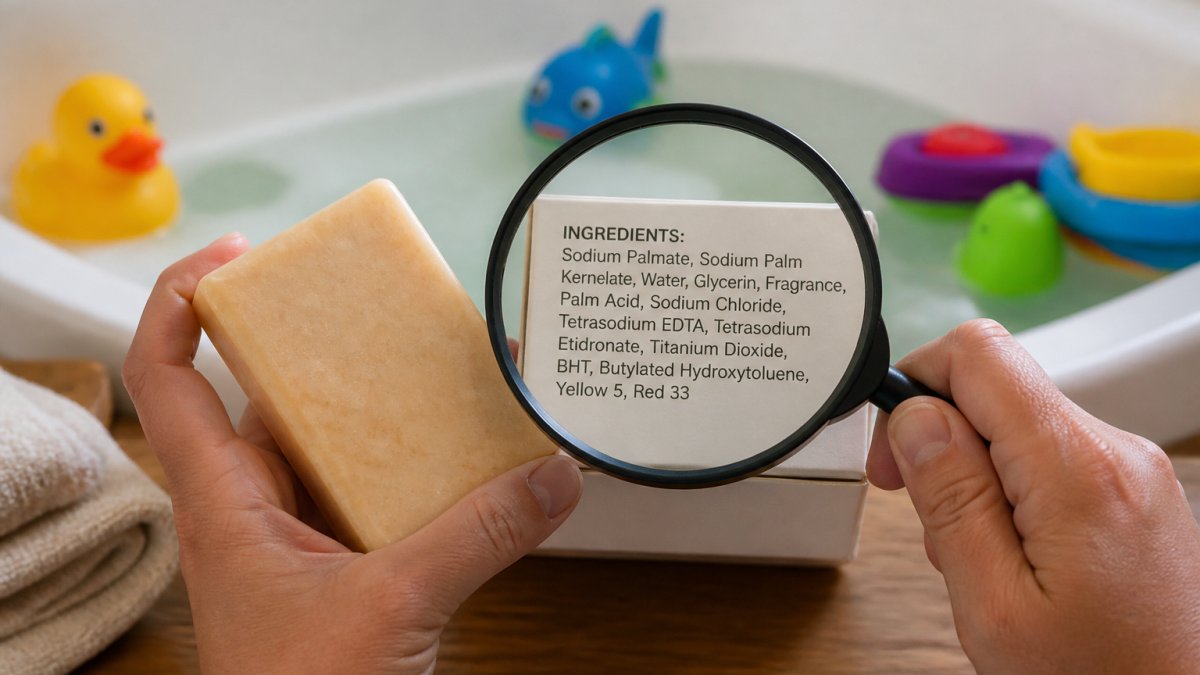
Our unscented Oh Naturale' bar lists six ingredients with no added fragrance or essential oils.
Fragrance-Free Soap for Kids: Why Unscented Is Safer
If you want zero added scent, the Sensitive Solutions 5-Bar Soap Pack is our straightforward answer: unscented bars made without synthetic fragrance, dyes, or sulfates, and sized for face, body, and hands.

Soap for Kids with Eczema: Moisturizing and Soothing Options
Soap for kids with eczema has a narrow job: remove dirt and excess oil. It is not a treatment. Understanding why that distinction matters makes product selection much easier.
What to look for in the bar itself:
- Colloidal oatmeal. Finely milled oat that disperses in water; it is recognized for soothing itchy, irritated skin and is a common ingredient in eczema-friendly cleansers.
- Honey and glycerin. Humectants that draw water toward the skin surface; glycerin retained in cold-process soapmaking is a genuine plus.
- No synthetic fragrance, dyes, or essential oils. Scent is the most avoidable trigger in a child's bath routine.
- A short ingredient list. Fewer ingredients mean fewer variables when a flare is already active.
Our Oatmeal & Honey Bar Soap is built on the oatmeal-and-honey pair.

A flare-time bathing protocol that actually helps:
- Keep the water lukewarm, comfortably warm, not hot. Hot water accelerates moisture loss.
- Cap the soak at about ten minutes. Longer baths pull moisture from skin.
- Skip bubble products and bath bombs entirely during a flare; they add fragrance and surfactants with no cleansing benefit.
- Wash only where needed, underarms, groin, hands, feet, face, and use plain water on calm areas.
- Pat dry, don't rub, and apply moisturizer within a few minutes while skin is still slightly damp. That timing matters more than the specific moisturizer for most families.
- Dress in soft, breathable fabric afterward and avoid tight waistbands or tags over irritated areas.
Best Body Wash for a 2-Year-Old: Bar Soap vs. Liquid
| Feature | Bar soap | Liquid body wash |
|---|---|---|
| Ingredient list | Usually shorter | Often longer, includes preservatives |
| Packaging | Plastic-free or minimal | Plastic bottle and pump |
| Cost per wash | Lower | Higher |
| Bath-time handling | Slippery for small hands | Easy to dispense |
| Best for | Sensitive, reactive skin | Older kids who bathe alone |
How to Use Soap Without Worsening Dryness
1. Set the water temperature.
2. Cap bath time.
3. Use less soap than you think. A few swipes of a bar across a washcloth, or one pump of liquid, is enough for a whole child. More lather does not mean cleaner skin. For a deeper guide, see how to build a simple cleansing routine for unpredictable skin.
4. Wash only where it is needed. Face, hands, feet, underarms, and the diaper or groin area are the priority zones. Arms, legs, and back often need only a rinse with plain water, especially on dry-skin days.
5. Rinse thoroughly. Residue left on skin is a common and overlooked irritant. Rinse until the water runs clear and skin no longer feels slick.
6. Pat, don't rub. A soft towel pressed against skin removes water without friction. Leave skin slightly damp.
7. Moisturize within a few minutes. Apply lotion or cream while skin is still damp to lock in water (the American Academy of Dermatology). This single step does more for dryness than any cleanser choice.
8. Skip soap on calm areas during a flare. Plain water is enough where skin is not dirty, and it removes one variable while skin is reactive.
When to Stop a Product and Seek Medical Advice
Seek medical advice rather than switching products again if a rash persists beyond a few days, keeps your child awake, or comes with fever. Eczema that is not settling, or skin that looks infected, needs a clinician's eye. For general guidance on children's skin conditions, the American Academy of Dermatology's resources on childhood eczema is a sensible starting point.
Shop Gentle Soaps for Your Child's Skin
Our family has made cold-process soap in small batches for generations.
Start with our unscented Sensitive Solutions 5-Bar Soap Pack for reactive skin, or the Sweet Cheeks Baby Soap for a simple daily bar.

Frequently Asked Questions
Which soap is safe for kids?
Look for a mild, fragrance-free soap with a short ingredient list. Avoid sulfates, synthetic fragrance, parabens, and phthalates. A gentle cleanser like an unscented cold-process bar soap made with plant-based oils is an option. Always patch test a new soap on a small area before using it all over.
What ingredients should I avoid in soap for children?
Avoid synthetic fragrance, sulfates (like sodium lauryl sulfate), parabens, phthalates, and dyes. Check the product label for terms like 'fragrance' or 'parfum' and choose unscented options instead.
Is fragrance-free soap better for children with sensitive skin?
Fragrance-free soap is an option for children with sensitive skin.
How often should I bathe a child with dry or sensitive skin?
Bathe a child with dry or sensitive skin using lukewarm water and a gentle cleanser. Rinse thoroughly and pat dry.
Choosing soap for a child with reactive skin asks more of a parent than most labels deserve. Amish Country Soap Co makes that decision simpler with cold-process bars built on short, pronounceable ingredient lists, made in small batches by 9th and 10th generation soapmakers. Browse our unscented and oatmeal options, and get started with Amish Country Soap Co to find a gentle bar your child's skin can settle into.


