


Table of Contents
- Why Natural Eczema Care Works Best as a Complement
- Eczema Home Remedies That Soothe and Protect Skin
- How to Relieve Eczema Itching Without Making It Worse
- The 3-Minute Rule for Eczema: Seal in Moisture Fast
- Choosing the Best Soap for Eczema-Prone Skin
- A Step-by-Step Daily Routine for Flare-Free Skin
- When Home Care Is Not Enough
- Frequently Asked Questions
Last Updated: October 18, 2026
Why Natural Eczema Care Works Best as a Complement
Learning how to treat eczema naturally starts with an honest premise: home remedies calm symptoms, but they work alongside medical care, not instead of it. At Amish Country Soap Co, we have spent generations making gentle soap for reactive skin. Natural care manages the itch and protects the skin barrier; a doctor diagnoses and treats the underlying condition.
Eczema, also called atopic dermatitis, is a chronic inflammatory skin condition marked by dryness, itching, and a weakened skin barrier. That barrier defect is why gentle, fragrance-free products matter so much.
What the Evidence Says About Home Remedies
Evidence for home remedies varies widely by remedy, and knowing which ones carry real support helps you spend your time wisely. Colloidal oatmeal and plain moisturizers have the strongest backing among drugstore options, according to the American Academy of Dermatology's eczema treatment guidance. Oils and honey have smaller studies behind them. Apple cider vinegar and bleach baths sit at the cautious end, useful only with strict dilution.
The pattern: simple, bland, skin-soothing products earn their reputation. Harsh or trendy ones usually don't.
Eczema Home Remedies That Soothe and Protect Skin
The most reliable eczema home remedies do two jobs at once: they calm inflammation and they rebuild the skin barrier. Anything that strips oil or adds fragrance works against you.
Oatmeal Baths and Colloidal Oatmeal
Colloidal oatmeal is finely ground oat that suspends in bathwater and coats skin with soothing plant fats. Draw a lukewarm bath, stir in the oatmeal, soak for 10 to 15 minutes, then pat dry and moisturize immediately. Our Oatmeal & Honey Bar Soap uses colloidal oatmeal and real honey for the same calming effect in daily washing.

Oils, Honey, and Other Topical Options
Oils seal in water; they don't add it, so apply them to damp skin. Coconut oil and sunflower seed oil are common choices, and manuka honey has drawn interest for its antibacterial properties. Avoid olive oil on broken skin, since it can sting and irritate. A thick salve over a fragrance-free moisturizer gives the best barrier repair.
How to Relieve Eczema Itching Without Making It Worse
The fastest way to relieve eczema itching is a cool compress plus a thick moisturizer, not scratching. Scratching tears the skin barrier and invites infection, which is how a small flare becomes a big one.
Try these steps:
- Press a cool, damp cloth on the itchy area for 5 to 10 minutes.
- Apply moisturizer while skin is still damp.
- Keep nails short and wear soft cotton gloves at night.
- Switch to loose cotton clothing that won't trap heat.
- Distract yourself with a walk or a task; the urge usually fades within minutes.
Heat, sweat, wool, and stress are common triggers. Track flares for two weeks and the pattern often becomes obvious.
The 3-Minute Rule for Eczema: Seal in Moisture Fast
The 3-minute rule for eczema means applying moisturizer within three minutes of leaving the bath or shower, while skin is still damp. This locks water into the skin before it evaporates and is one of the highest-impact habits for dry, reactive skin.
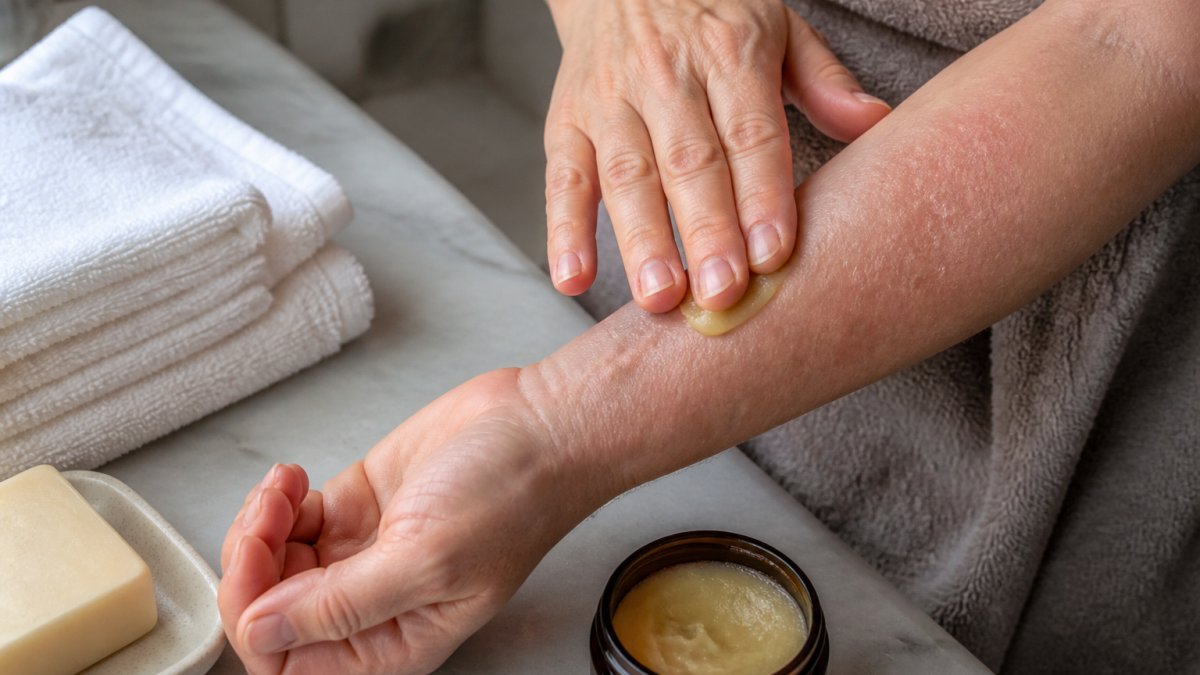
Keep the routine simple:
- Pat skin dry instead of rubbing.
- Apply a fragrance-free moisturizer first.
- Follow with a thicker salve on the driest patches.
- Dress immediately to hold in moisture.
Do this twice daily, and after every hand wash during flare-ups.
Beeutiful | Signature Salve 4oz →
Choosing the Best Soap for Eczema-Prone Skin
The best soap for eczema is fragrance-free, dye-free, and made without harsh detergents, because fragrance is one of the most common irritants for reactive skin. Look for short ingredient lists you can pronounce.
Our Sensitive Solutions 5-Bar Soap Pack ($21.99) is unscented and cold-processed from olive, coconut, palm, avocado, and castor oils, with no synthetic fragrances, dyes, or sulfates. It suits eczema, rosacea, psoriasis, and general sensitivity, and it is gentle enough for a baby's skin. Skip antibacterial bars and anything labeled "fresh scent."

A Step-by-Step Daily Routine for Flare-Free Skin
A consistent daily routine matters more than any single remedy. Here is the sequence we recommend to customers managing dry, itchy skin:
| Step | What to Do | When |
|---|---|---|
| 1 | Bathe in lukewarm water, 5-10 minutes | Once daily |
| 2 | Use a fragrance-free bar, no washcloth scrubbing | During bath |
| 3 | Pat dry, leave skin damp | After bath |
| 4 | Moisturize within 3 minutes | After bath |
| 5 | Seal dry patches with salve | Morning and night |
| 6 | Reapply moisturizer after hand washing | Throughout day |
For stubborn patches, our Beeutiful Signature Salve 4oz ($13.00) is our best-selling salve, made for eczema, psoriasis, acne, and rosacea. A 2oz size ($7.50) lets you try it first. Wash bedding and clothing with our Unscented Natural Laundry Soap ($7.00), which is fragrance-free and safe for sensitive skin.

When Home Care Is Not Enough
See a dermatologist when itching disrupts sleep, skin cracks or weeps, or flares spread despite consistent care. These signs can point to infection or a condition needing prescription treatment.
Natural care complements medical care; it does not replace it. Bring your routine to your appointment so your doctor can build on it. For children and infants, ask a pediatrician before trying new oils or bath additives, since young skin reacts differently. Our fragrance-free bars are a gentle starting point for families, but a doctor's guidance comes first.
Frequently Asked Questions
What is the 3-minute rule for eczema?
The 3-minute rule means applying moisturizer within three minutes of getting out of the bath or shower, while skin is still damp. This traps water in the skin barrier before it evaporates. Pat dry gently, leave a little moisture on the skin, then smooth on a fragrance-free cream or salve. Doing this every time you bathe is one of the simplest habits for reducing dryness and itch, and it pairs well with a gentle, unscented soap during the wash itself.
Can oatmeal baths or coconut oil help eczema?
Colloidal oatmeal is one of the better-supported home remedies for calming itch and irritation, and it is often used as a bath additive or in a gentle bar soap. Virgin coconut oil can support the skin barrier and add moisture, and sunflower seed oil is another option with evidence behind it. Results vary by person, so test a small area first. Avoid anything with added fragrance, and stop using a remedy if burning or a new rash appears.
Which natural remedies may help relieve eczema itching?
Cool compresses, colloidal oatmeal baths, fragrance-free moisturizers, and barrier-supporting oils like coconut or sunflower seed oil are common choices for how to relieve eczema itching. Some people also try diluted apple cider vinegar baths or bleach baths, but these need care and should not be overused. Wet wrap therapy, done with guidance, can calm intense itch. Keep nails short and avoid hot water, which strips the skin and makes itching worse.
What ingredients should people with eczema avoid in soaps and skin-care products?
Look for fragrance-free products and skip synthetic dyes, sulfates, and harsh detergents. Essential oils and botanical extracts, even natural ones, can trigger reactions in sensitive skin. Choose short ingredient lists you can pronounce, and patch test anything new on a small area for a few days. A gentle, unscented bar soap made for sensitive skin is a safer starting point than a heavily scented product, especially during a flare.
When should you see a doctor about eczema?
See a doctor if eczema covers large areas, keeps you from sleeping, or shows signs of infection such as oozing, crusting, or spreading warmth and pain. Persistent flares that do not improve with consistent home care, or skin that cracks and bleeds, also warrant a visit. Natural remedies work best alongside medical care, not as a replacement. A clinician can rule out other conditions and discuss prescription options when over-the-counter approaches are not enough.
Eczema rarely disappears on its own, and guessing at remedies wastes time you could spend feeling better. Start with the basics: lukewarm baths, a fragrance-free bar, and moisturizer within three minutes. Amish Country Soap Co makes that simple, with cold-processed soaps and salves built on a 250-year family tradition, simple ingredients, and small-batch care. Shop by skin need and give your skin a gentler daily routine.


